Textflowers
1995 (ongoing)
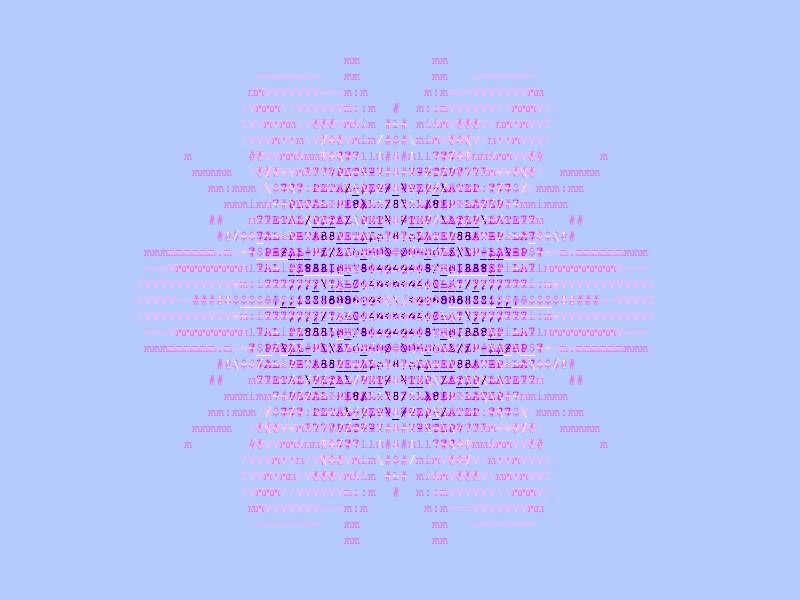
Textflowers is an ongoing body of work exploring whether beauty can be built by combining the work of many into one image. It asks what that means with permission rather than by extraction. It began in 1995 and it's still going. The process stays the same throughout. What changes is the technology of each moment, the screen resolution, the colour depth, and the image tools at hand.
Novak began the work at Frame Rate, an experimental online art space he founded in 1995. People sent him ASCII flowers they'd built, character by character, and he composited them into a single flower with their permission. The method has deep roots, from Arthur Duncan Austin's composite portraits in New Zealand in 1877, to Francis Galton's stacked face exposures around the same time, to Nancy Burson's averaged film stars in 1982. Austin noticed the combining could make “a decided improvement in beauty”. Textflowers picks up that thread. Does stacking increase beauty, if beauty is something each of us decides alone, and what does it mean to reach for it by pooling the work of many into one image?
Seen now, the method reads as a precursor. Long before machine learning, it builds a new image from a bank of existing ones, the same move that drives AI image generation today. The difference sits in the consent. Here the images were given, not taken.
Preset 1
1995
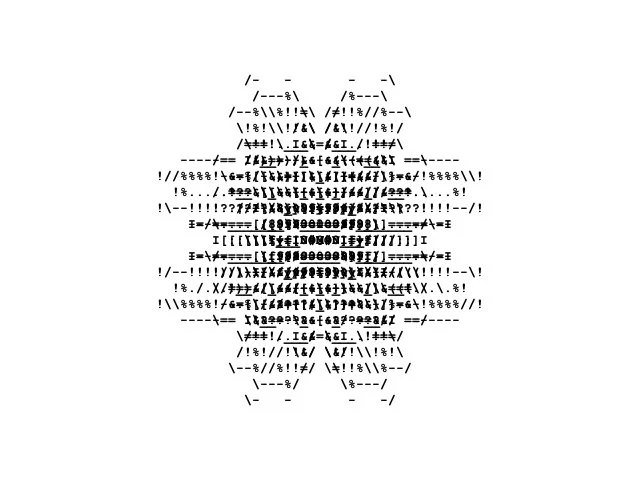
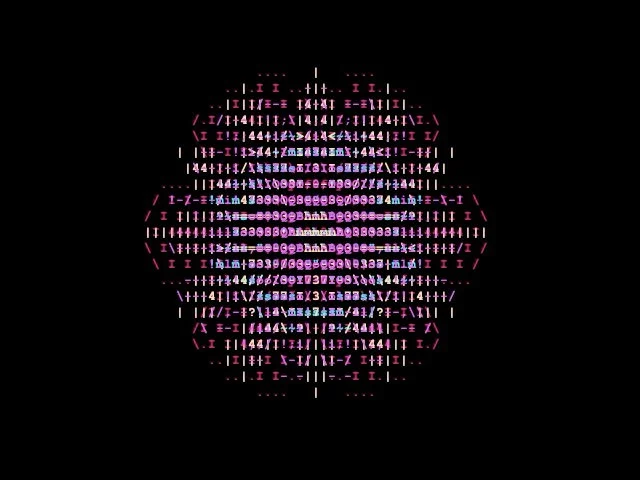
Preset 1 is the first set of works in the series. They match the common home PC in New Zealand at the time: a 14-inch CRT, 640 by 480 pixels, 256-colours, and an 80 by 30 character grid.
Each flower here is built from up to four separate pieces of ASCII art. Every piece is a single colour on a transparent ground, stacked at full opacity on a flat background, the characters meshing into a single bloom. Nothing fades. Where two glyphs meet, the top one sits over the one beneath.

Preset 2
1996 - 2000
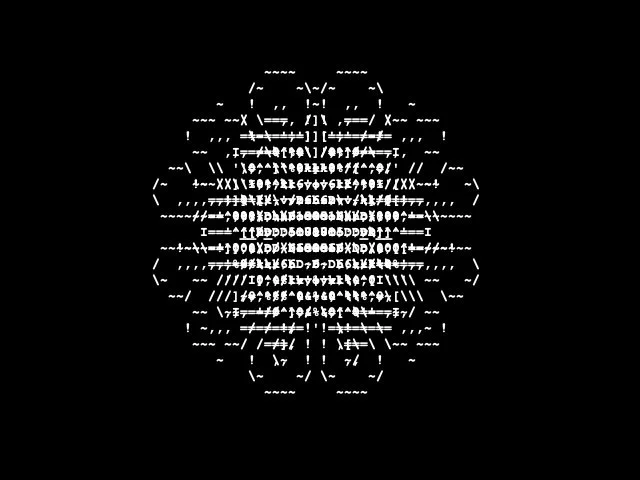
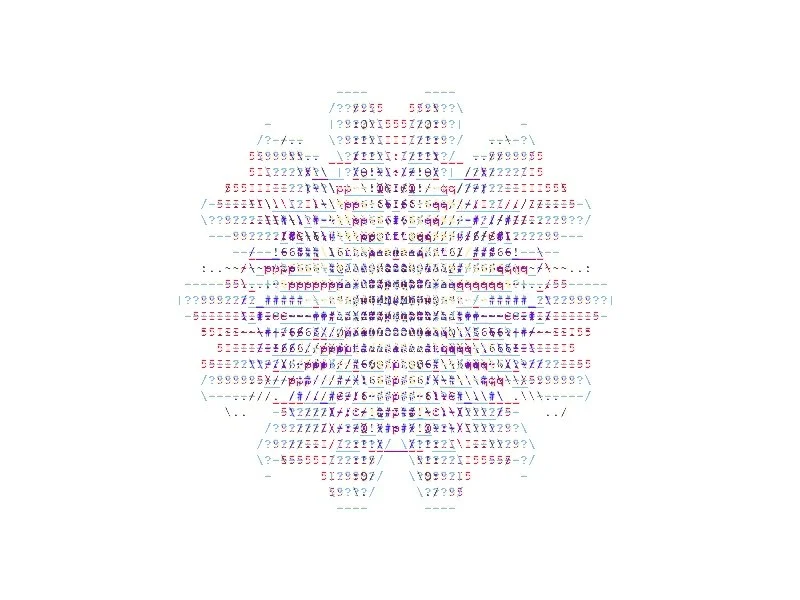
Preset 2 covers the family-standard years. The works match the common home PC in New Zealand across this window: a 15-inch CRT, 800 by 600 pixels, 16-bit colour, and a 100 by 37 character grid.
More memory meant deeper stacks. Each flower here is built from twelve to twenty separate pieces of ASCII art, every one a single colour on a transparent ground, layered on a flat background, the characters meshing into a single bloom. This is also where the layers begin to blend. Rather than sitting fully opaque, pieces could be set to partial opacity, and later in the window masked to fade within a single layer, so the blooms merge into each other instead of simply overlapping.
Preset 3
2001 - 2009
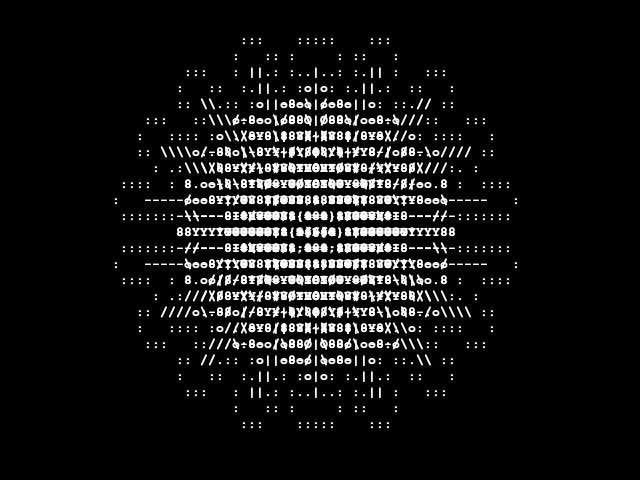
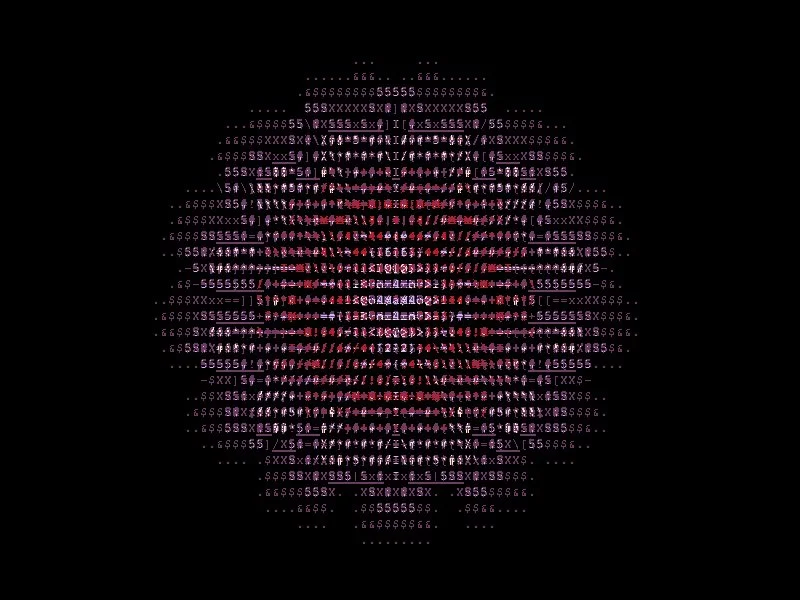
Preset 3 spans the move from the last big CRTs to the first flat screens. The works match the common home PC in New Zealand across this window: a 17-inch display, 1024 by 768 pixels, 32-bit colour, and a 128 by 48 character grid.
By now memory was rarely the limit. Each flower here is built from thirty to fifty separate pieces of ASCII art, every one a single colour on a transparent ground, layered on a flat background, the characters meshing into a single bloom. With 256 MB and then a gigabyte of RAM becoming normal, the blooms grow denser, the layers freely blended with partial opacity and masks so the pieces merge rather than stack.
Preset 4
2010 - 2015
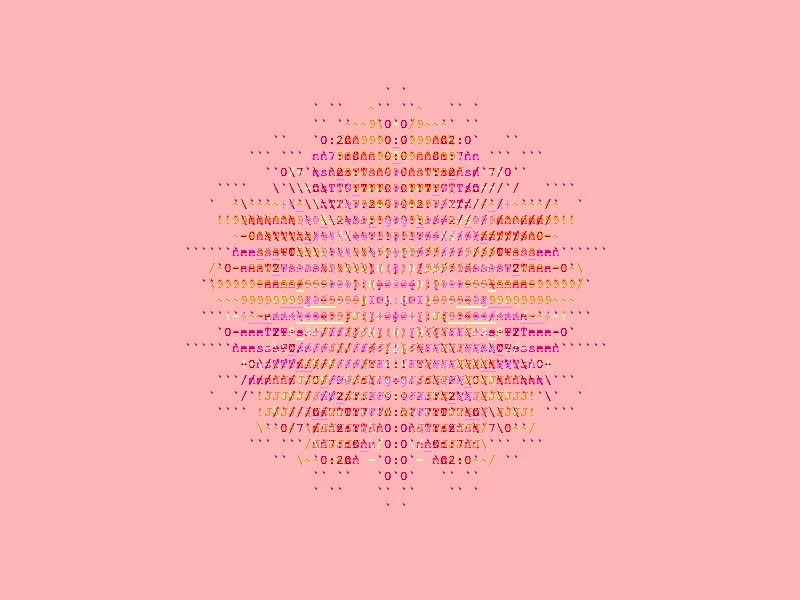
Preset 4 moves to widescreen. The works match the common home PC in New Zealand across this window: a widescreen monitor, 1366 by 768 pixels, 32-bit colour, and a 170 by 48 character grid.
The wider grid holds more without straining anything. Each flower here is built from sixty to a hundred separate pieces of ASCII art, every one a single colour on a transparent ground, layered on a flat background and blended into a single bloom. With multiple gigabytes of standard RAM, layer count stops being a real constraint, so the density here is a choice rather than a ceiling.
Preset 5
2016 - 2026
Preset 5 is the current phase, and it's still open. The works match the common home PC in New Zealand across this window: a Full HD display, 1920 by 1080 pixels, 32-bit colour, and a 240 by 67 character grid. This has held as the most common setup for a decade, so the preset runs on.
Density is now bounded only by legibility, not by the machine. Each flower here is built from a hundred or more separate pieces of ASCII art, every one a single colour on a transparent ground, layered and blended into a single bloom. With the memory of a modern PC, the stack could run to many hundreds, so the working question shifts from what the computer can hold to how many hands a single flower can hold before it stops reading as one.