Still an Oasis
University Library, University at Albany, New York, US, 2026
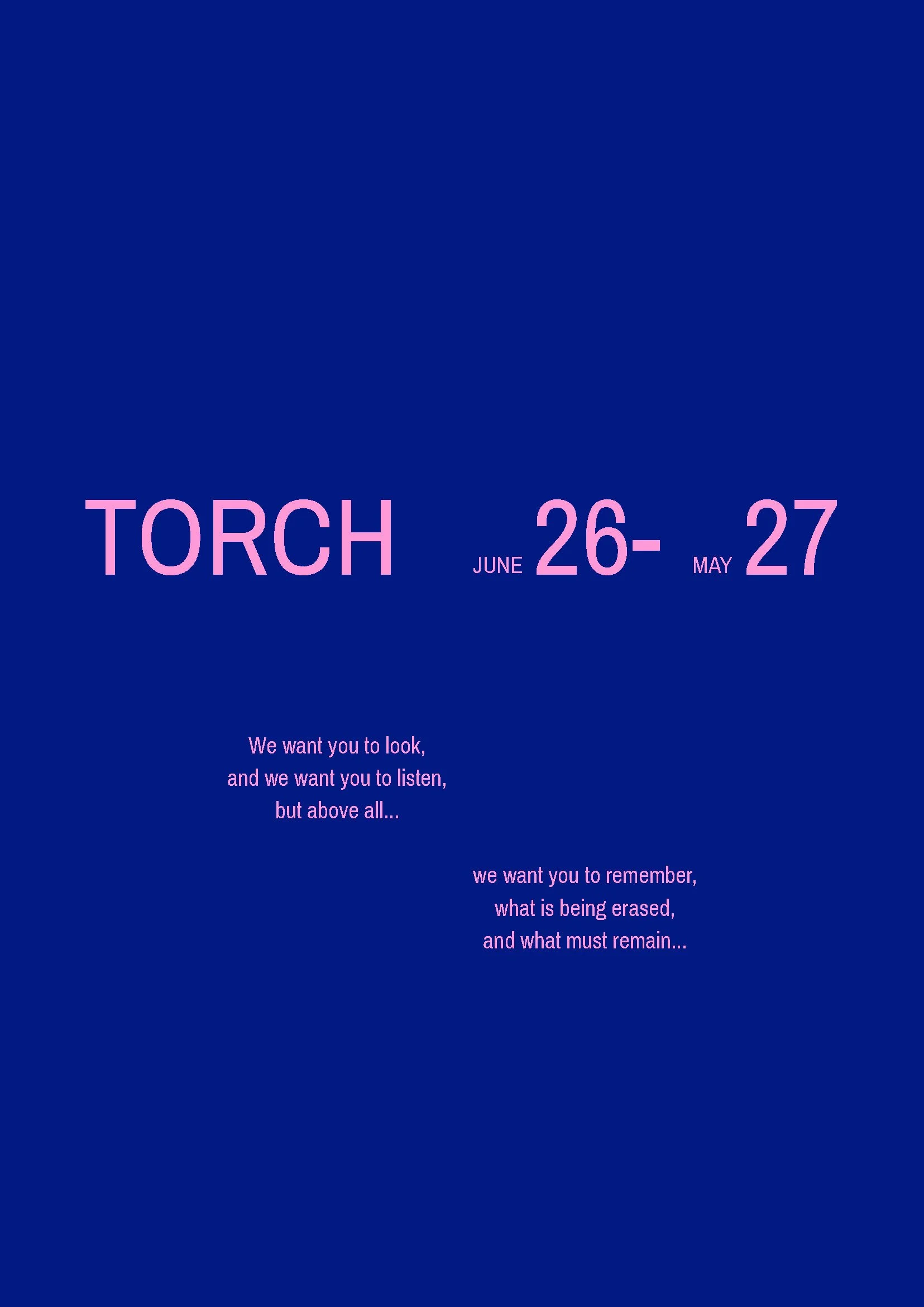
Across the United States, words and resources tied to queer life are quietly being erased. Anti-DEI mandates in early 2025 set this in motion, and since then the federal government has been scrubbing terms linked to queer communities from official websites and grant records. Public libraries are facing record numbers of book bans. Still an Oasis steps into that quiet erasure to show what's being hidden, tracing how queer identities are policed across physical, digital, and algorithmic space. Throughout the show, things that seem absent under ordinary conditions turn out to have been present all along, waiting for the right light to bring them forward. At its heart is a new text, Torch '26, inspired by the radical 1972 University at Albany yearbook edited by celebrated queer author and activist Dr Ron Simmons. It replaces the usual student portraits with blank pages, each carrying a single banned word.
The show takes its name from that same yearbook. In it, students described Edward Durell Stone's stark white campus, with its symmetrical palm-tree columns, as a concrete oasis. Imperfect as the architecture was, they wrote, "It was still an oasis and it was still ours". That spirit runs underneath everything here. The university remains an oasis in exactly that sense, a place that holds space for queer life and keeps it visible. As other institutions are pressured to pull books from shelves, university libraries protect intellectual freedom and critical thinking. Supported by the University Library, the works keep these words and queer stories firmly on the public record.
The Light Given
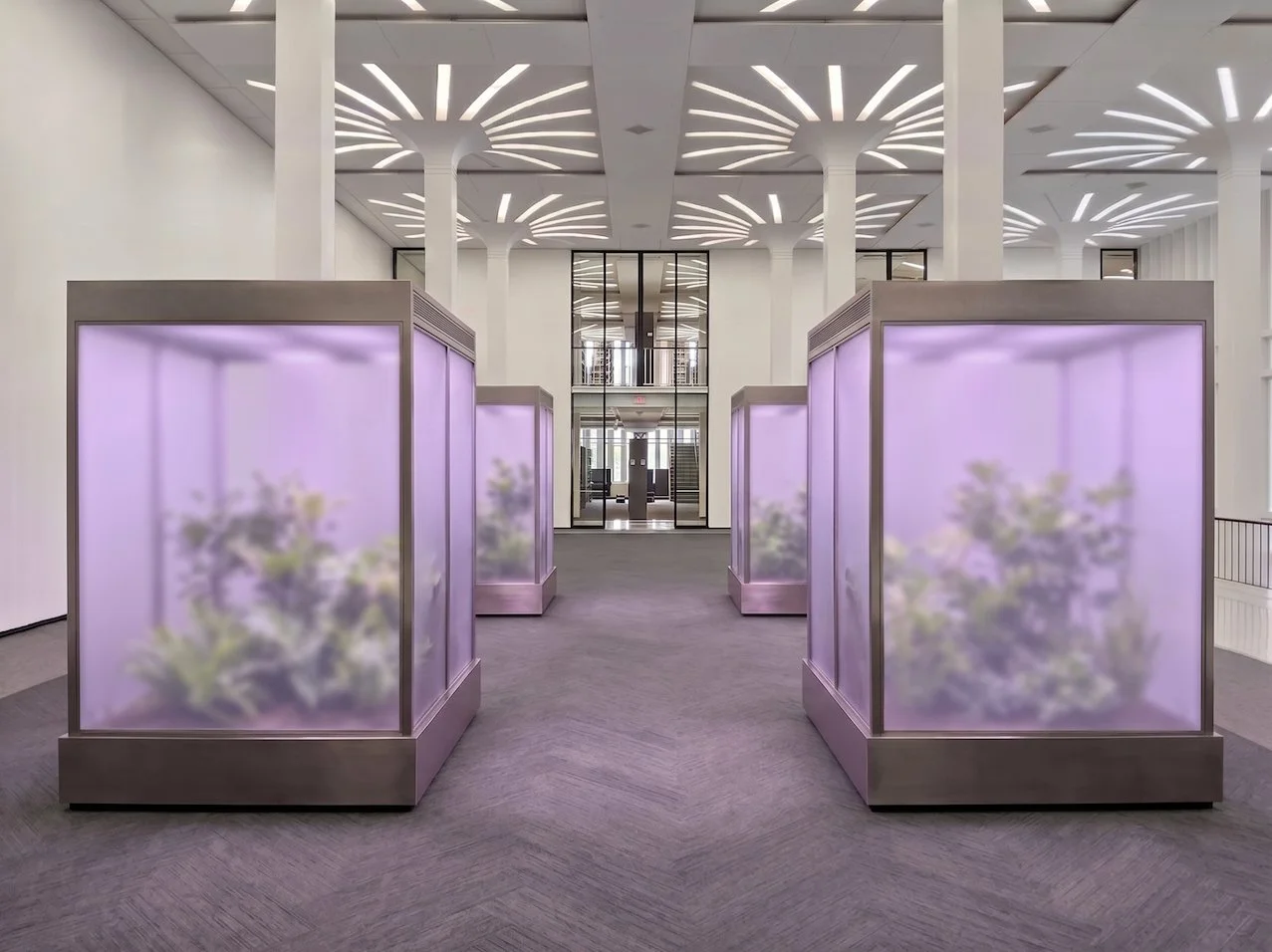
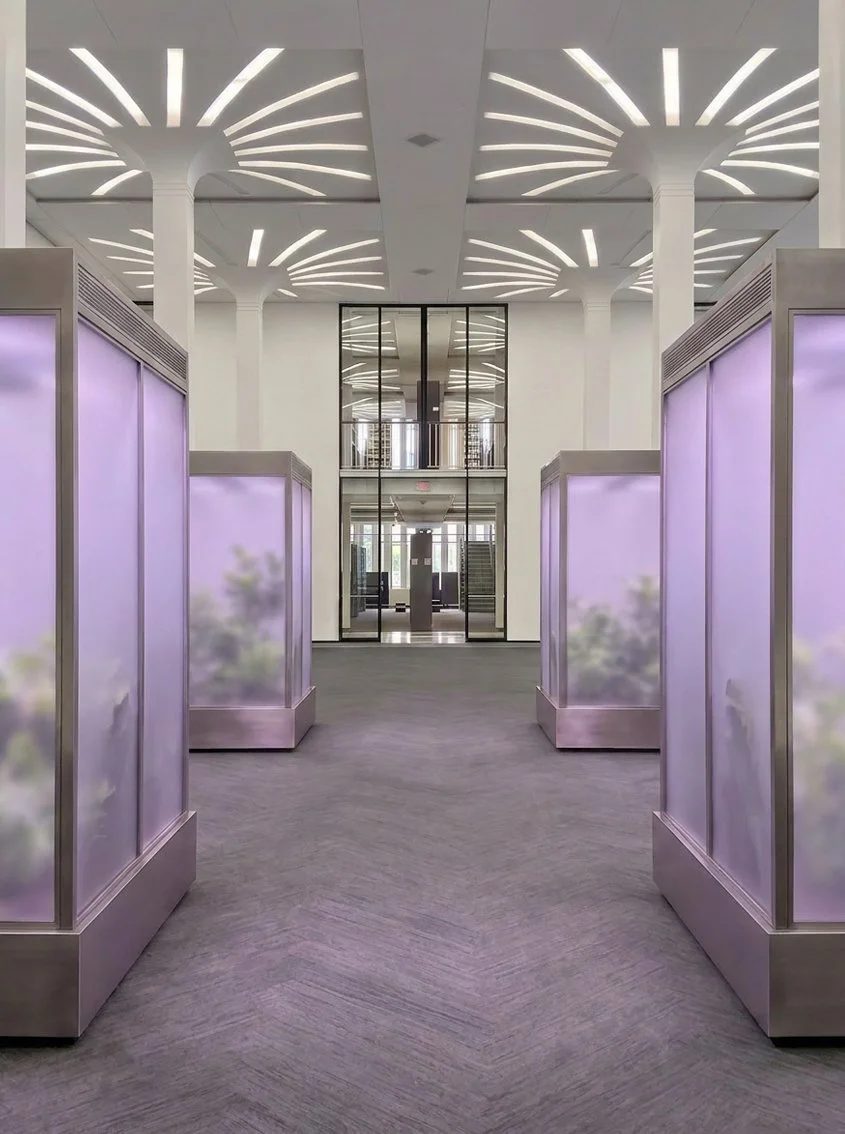
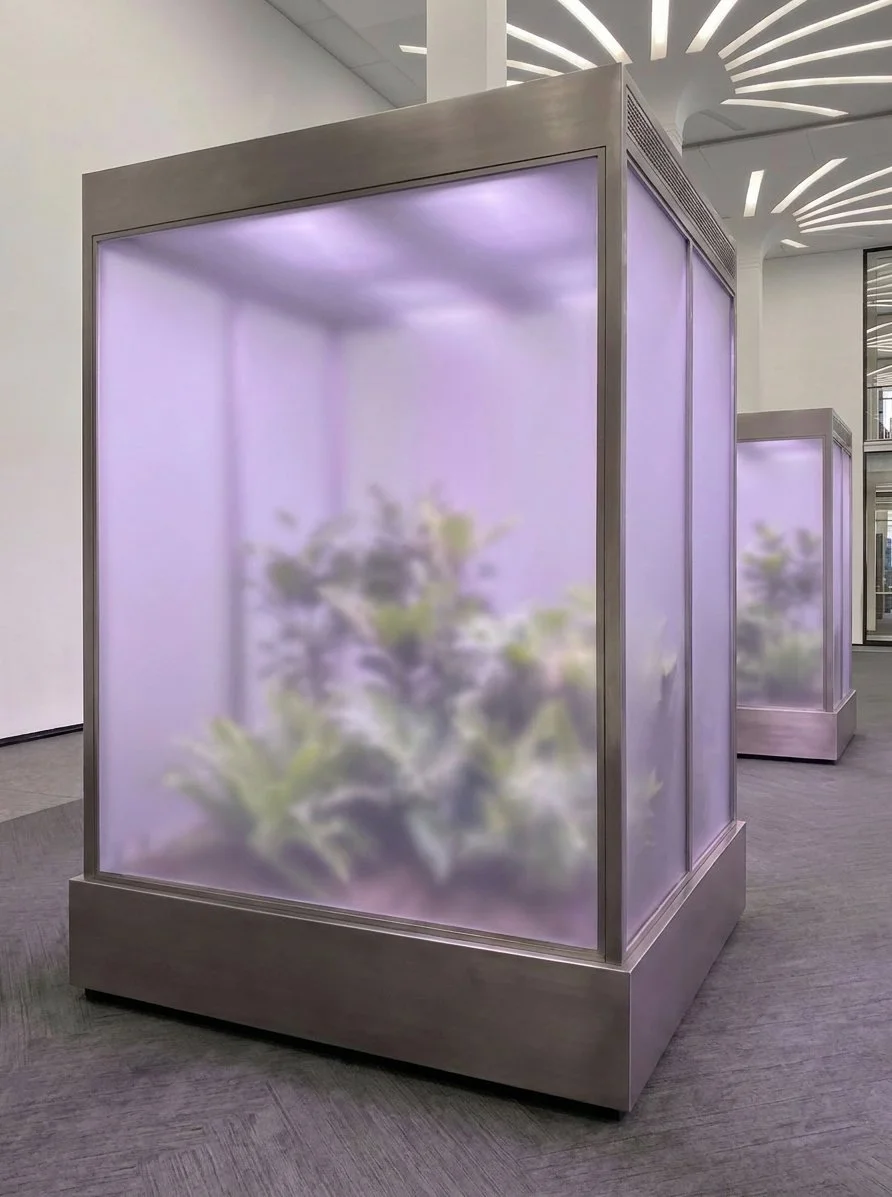
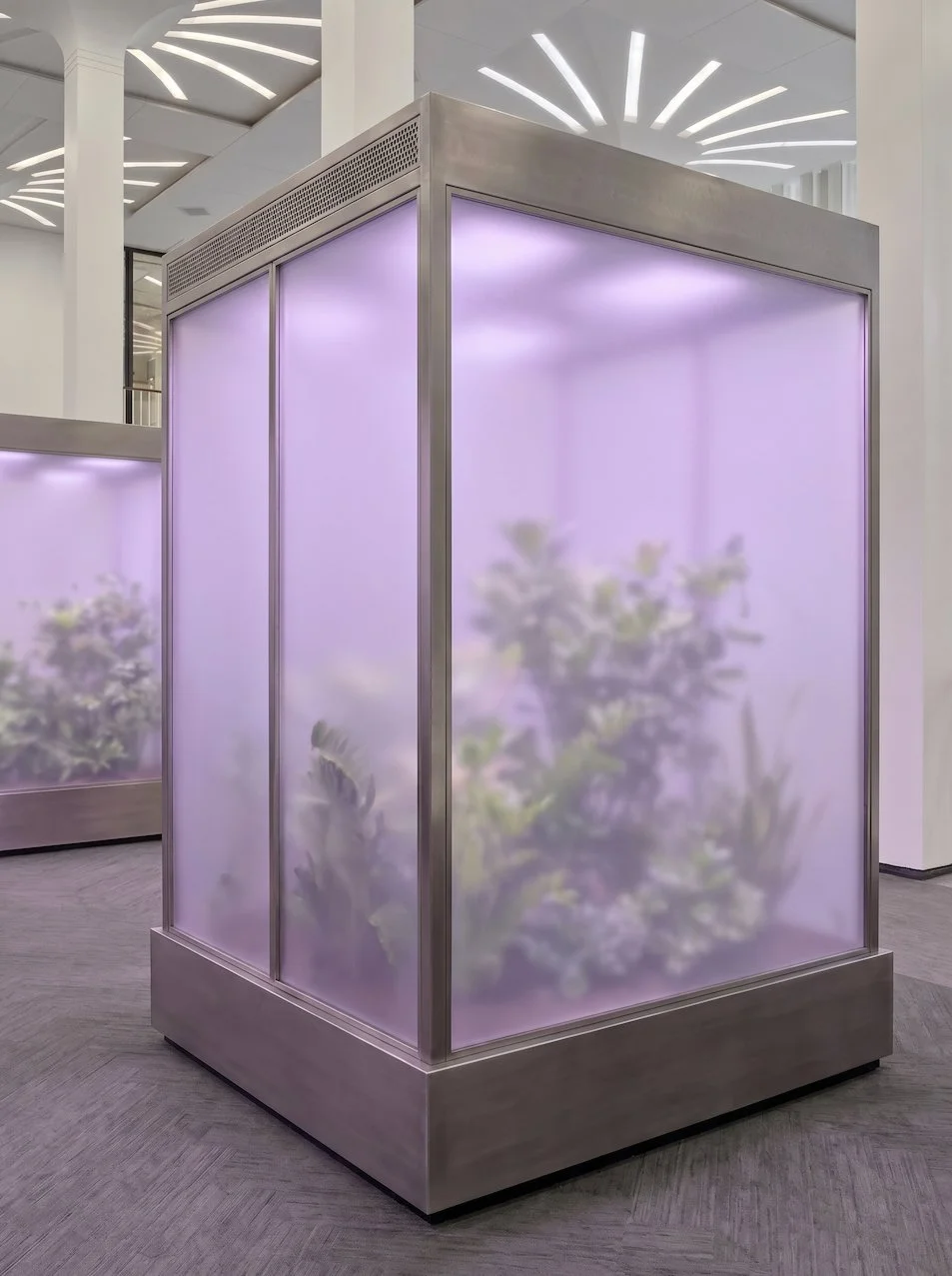
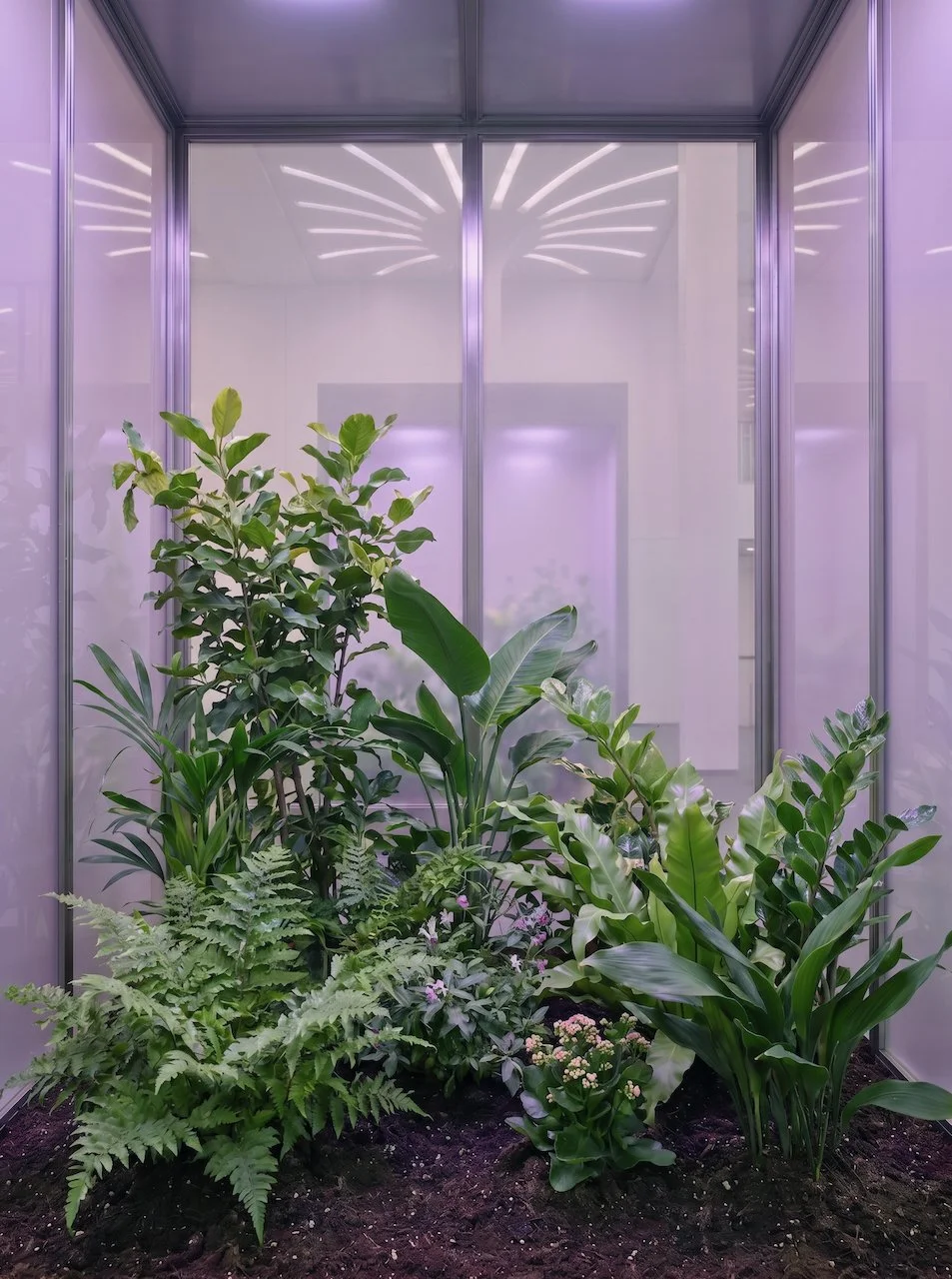
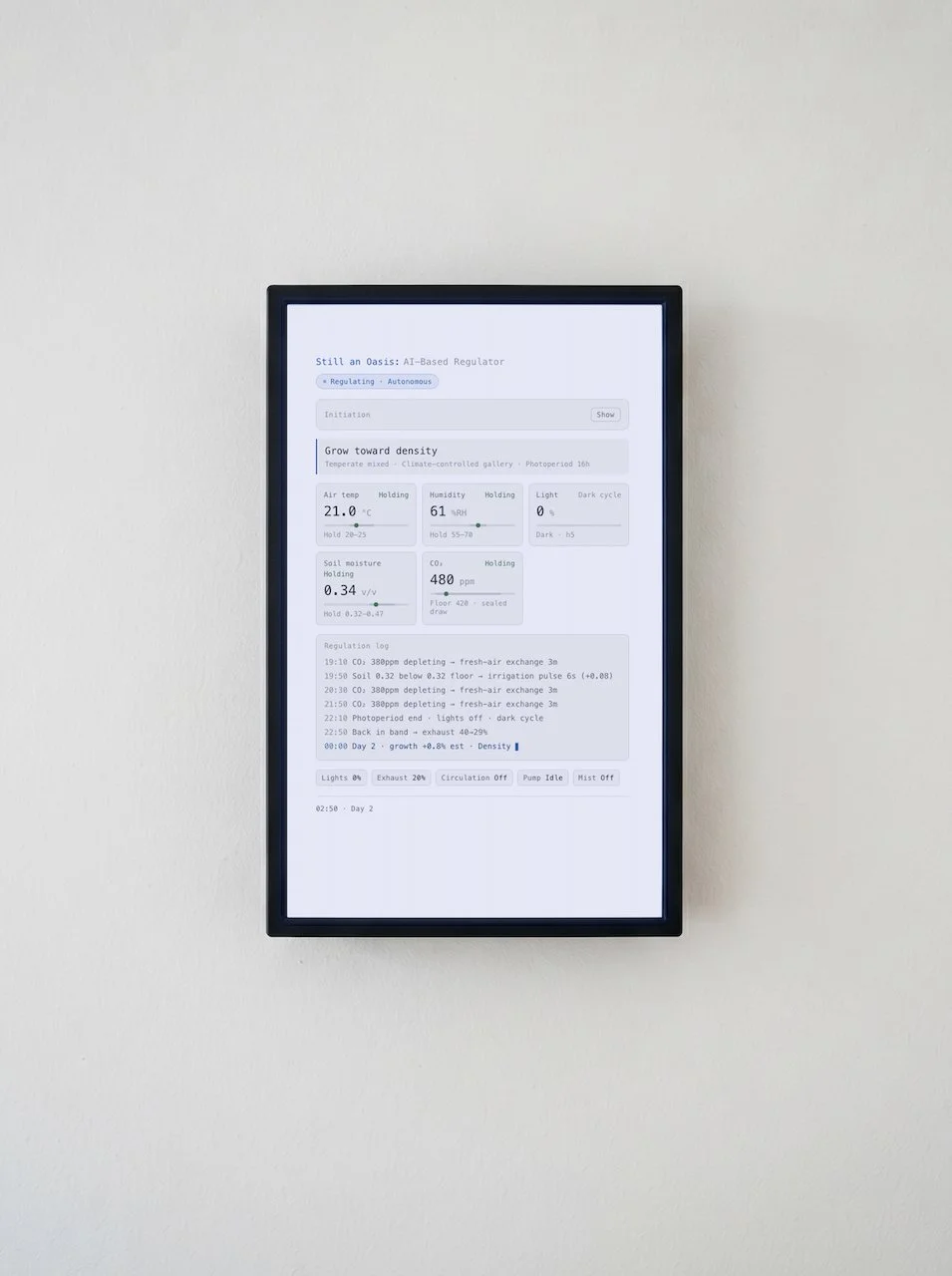
Four sealed cases stand in the library foyer, each sustaining a living garden in soil. Violet light drives the growth inside, a known horticultural tool that boosts chlorophyll and forces denser, more compact plants. A custom AI driven system regulates each enclosure, holding the light, air, and moisture steady. The plants are cared for, but entirely on the system's terms, and frosted glass blurs the view, so the life inside reads only as soft green forms behind glass. The work treats these plants as queer bodies, kept alive yet held at a remove. Sustained and surveilled, displayed and obscured, shaped into something orderly and contained. It speaks to a present moment in which queer identities are quietly managed across physical, digital, and algorithmic space, present enough to be catalogued, blurred enough to be controlled. Tended, but increasingly kept from view.
Roll Call
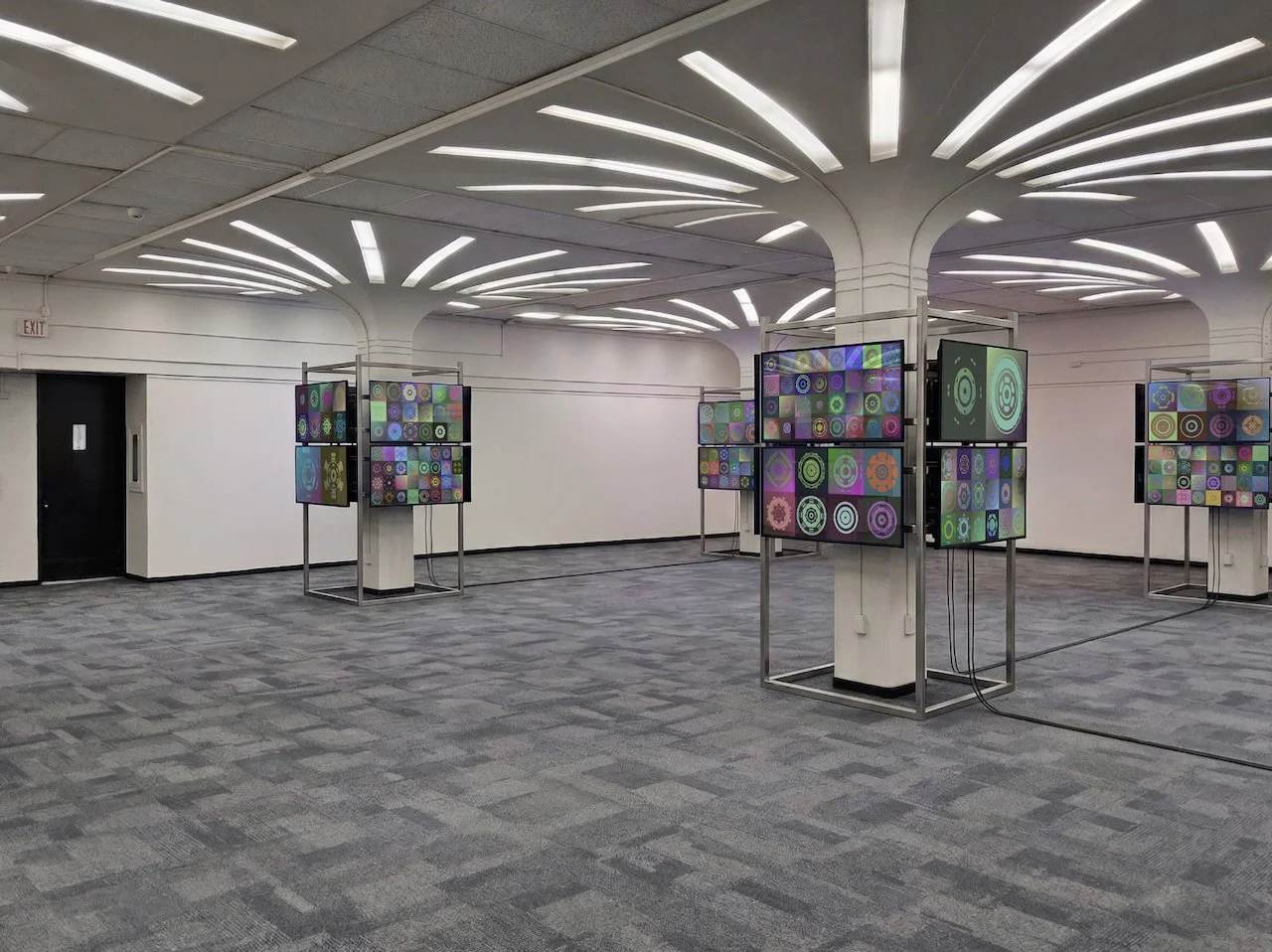
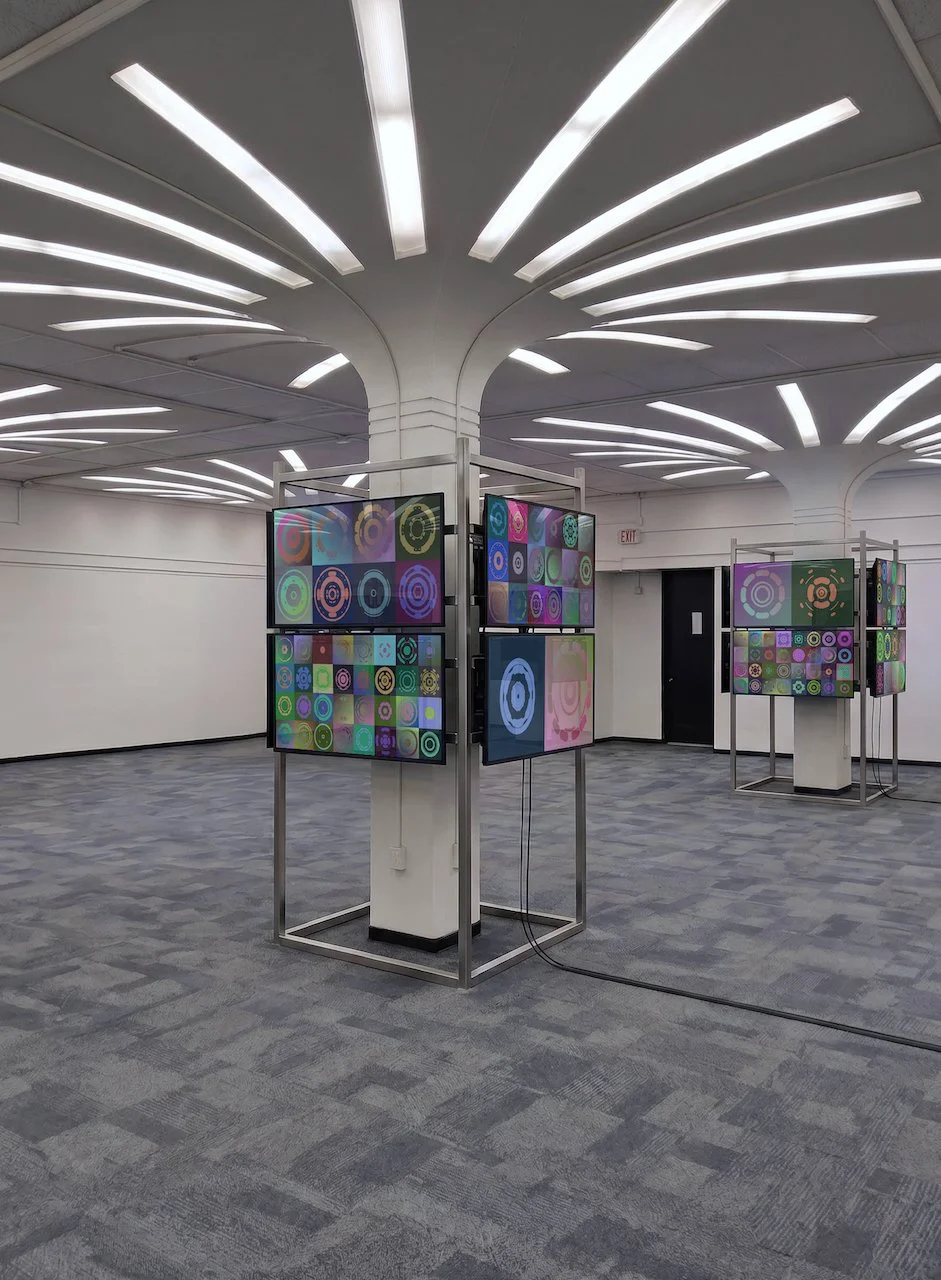
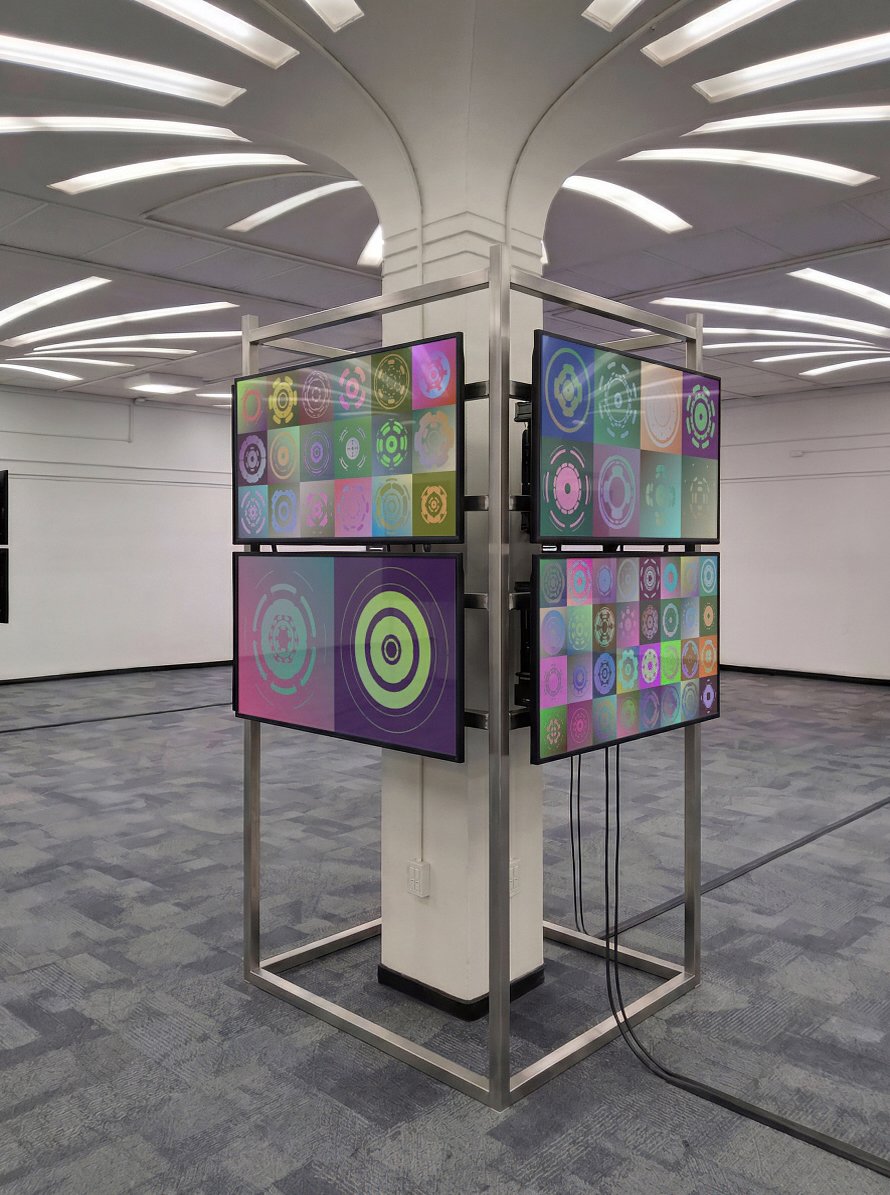
Screens surround a room's pillars on simple scaffolding, each filled with a grid of small glowing symbols that slowly shift in shape and colour. Every change rings a soft chime, so the room hums with a gentle, random scatter of notes. The grid looks like a wall of portraits with the faces removed, each person reduced to an anonymous mark. It's a picture of how censorship works, turning people into entries that can be quietly sorted, hidden, and erased. Yet those same coded symbols echo how queer communities have always stayed visible to one another while remaining unreadable to anyone policing them. The calm chimes are what unsettle. They make a steady process of erasure sound soothing and almost pleasant, when it's anything but.
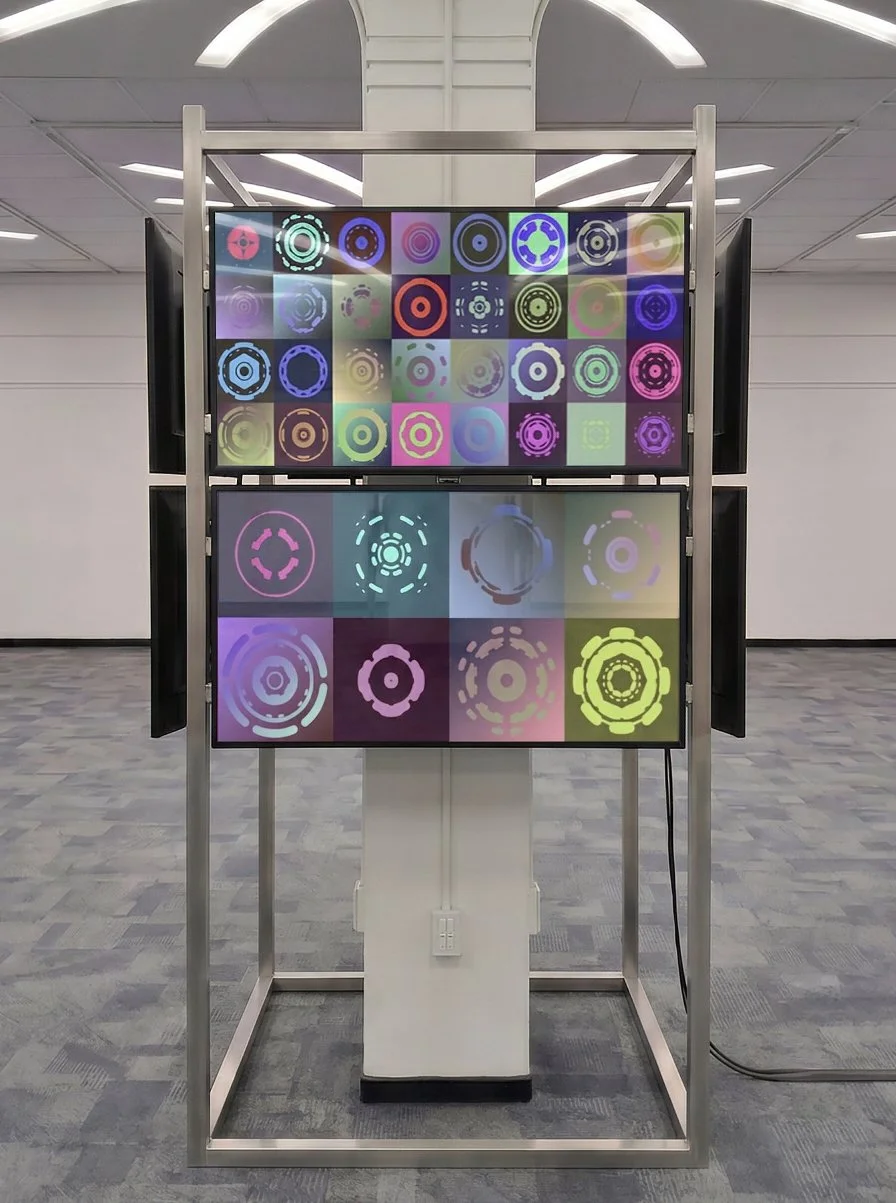
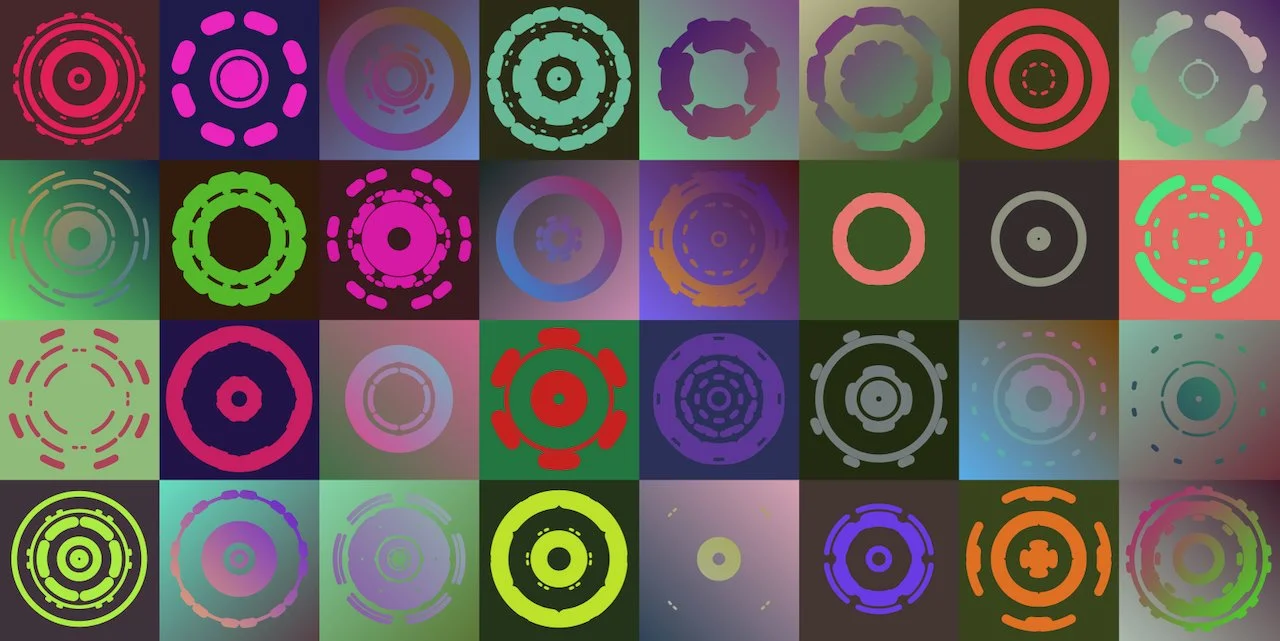
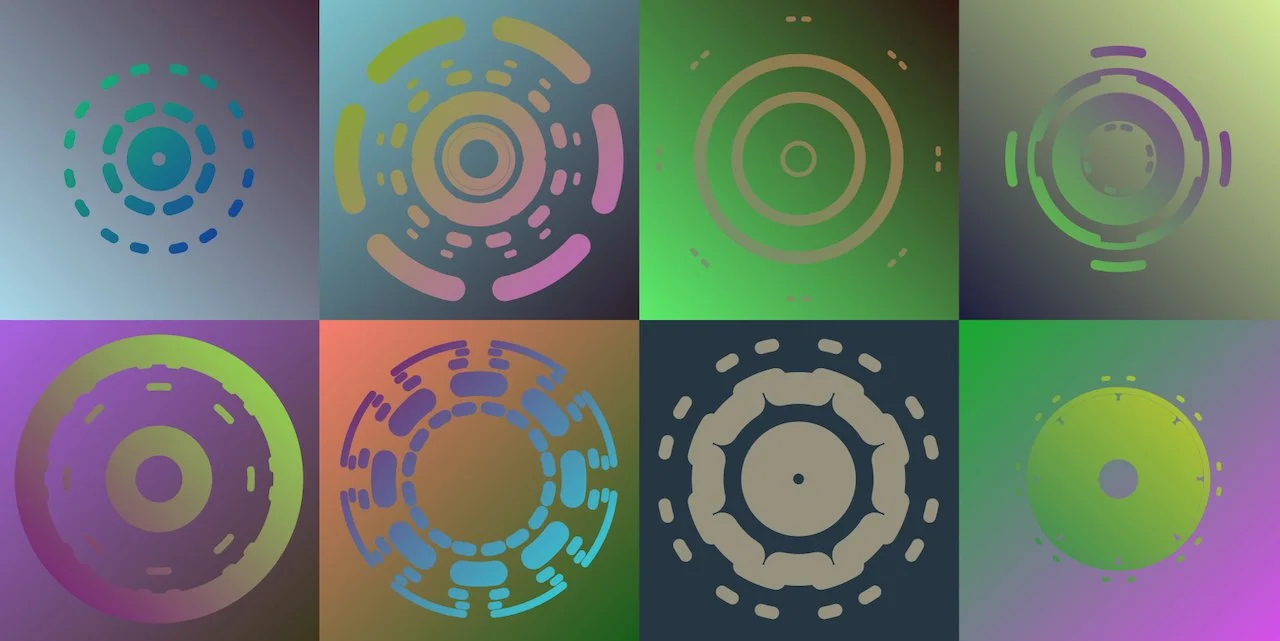
What the Daylight Keeps
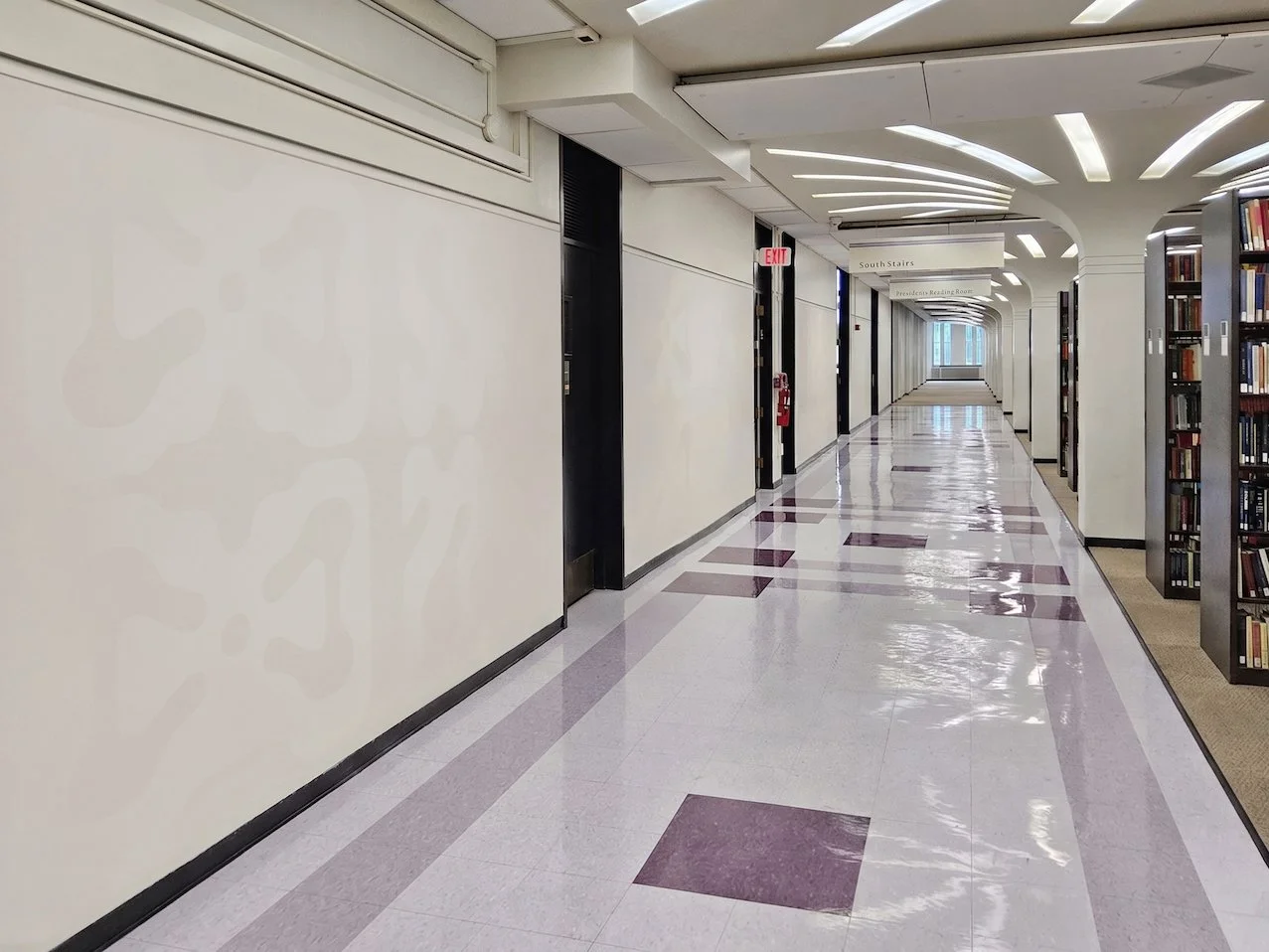
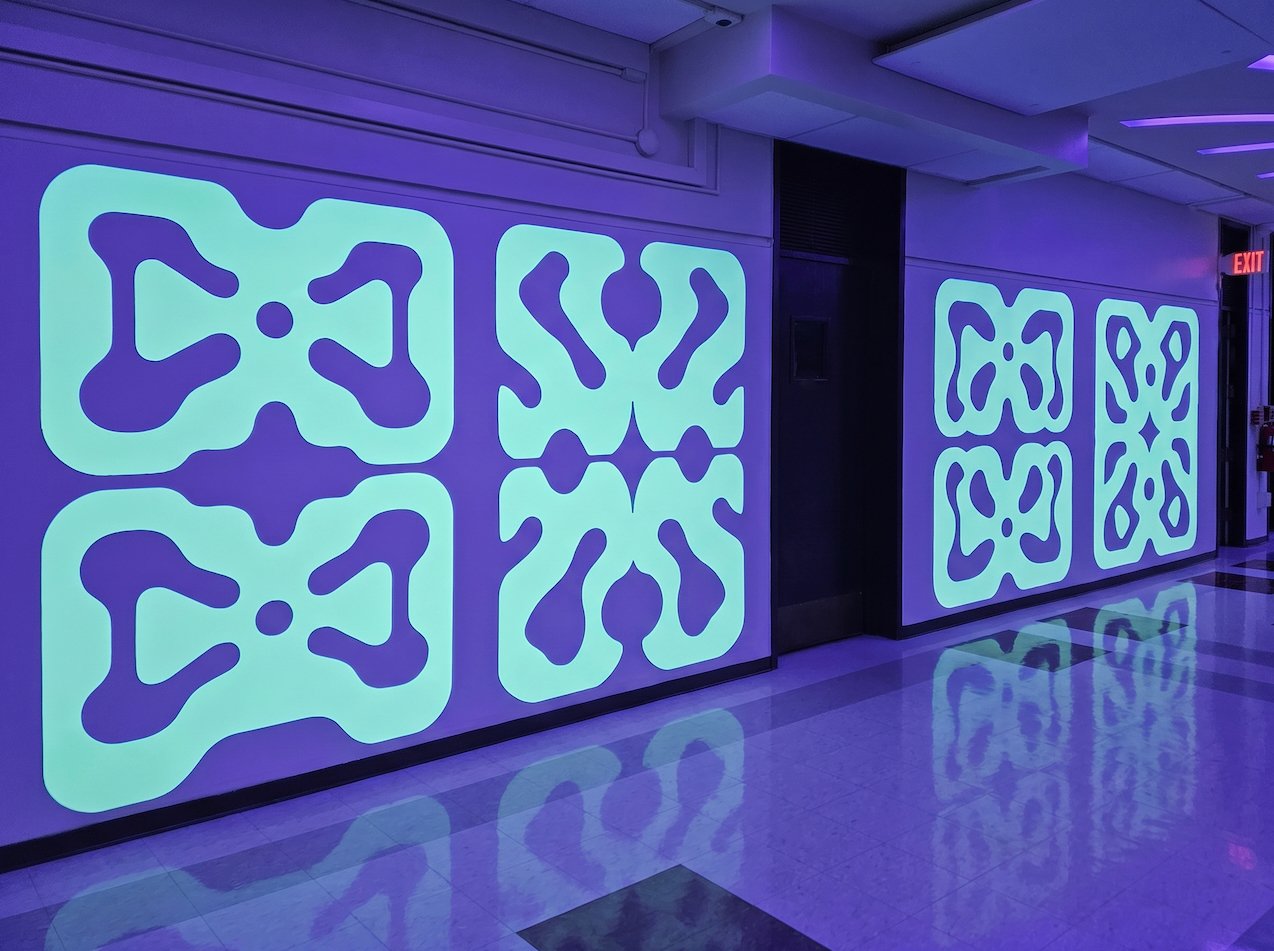
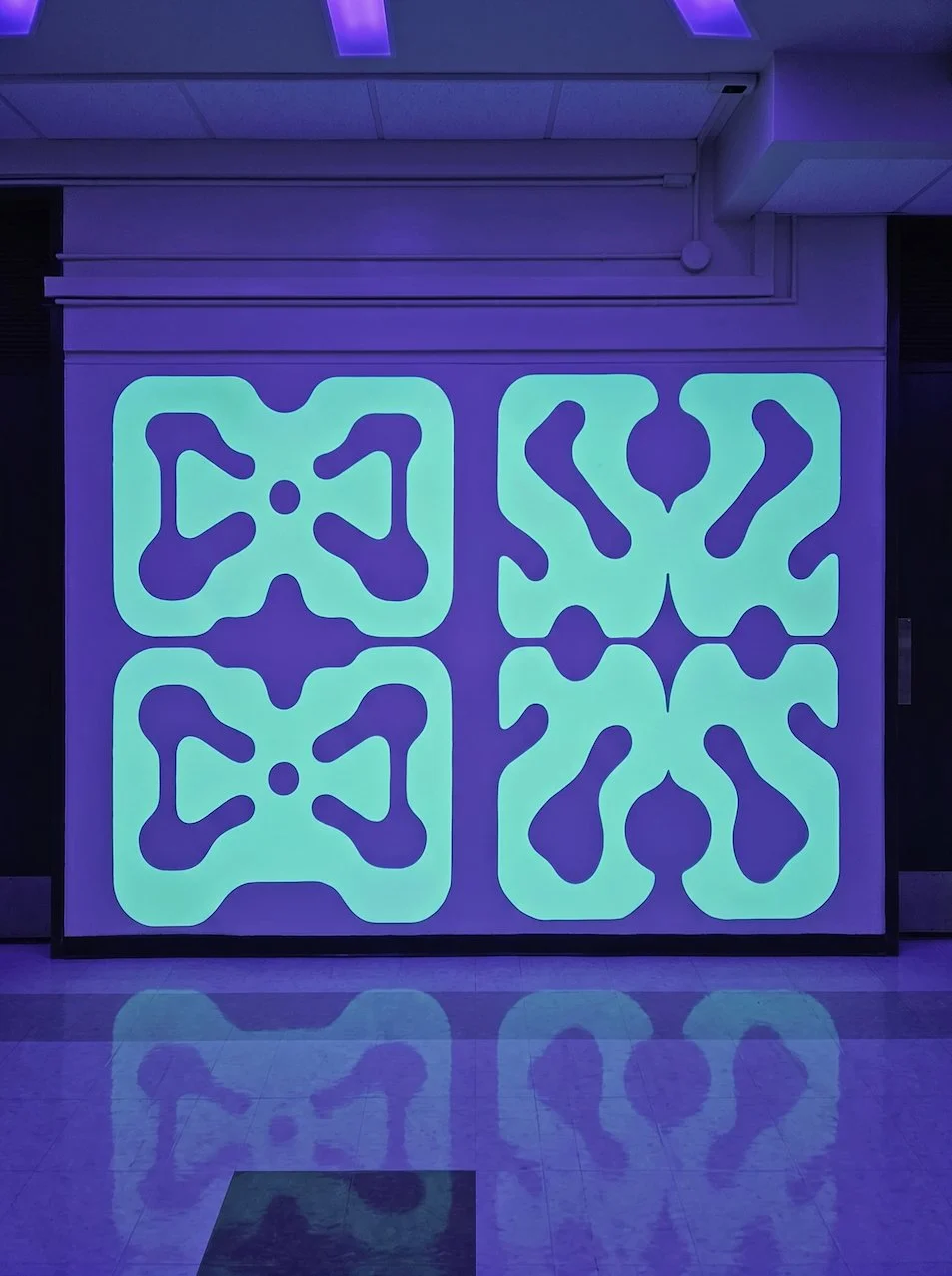
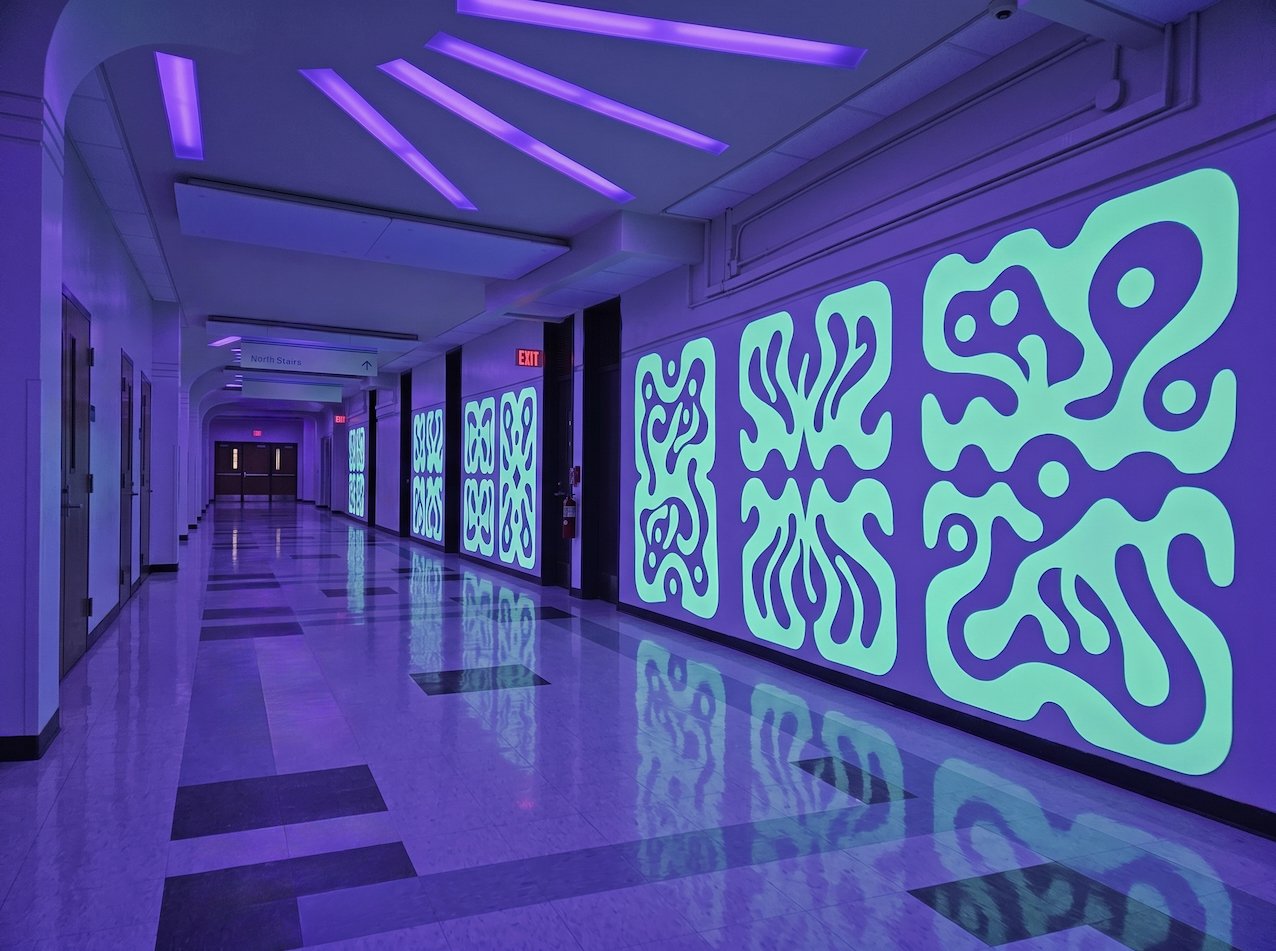
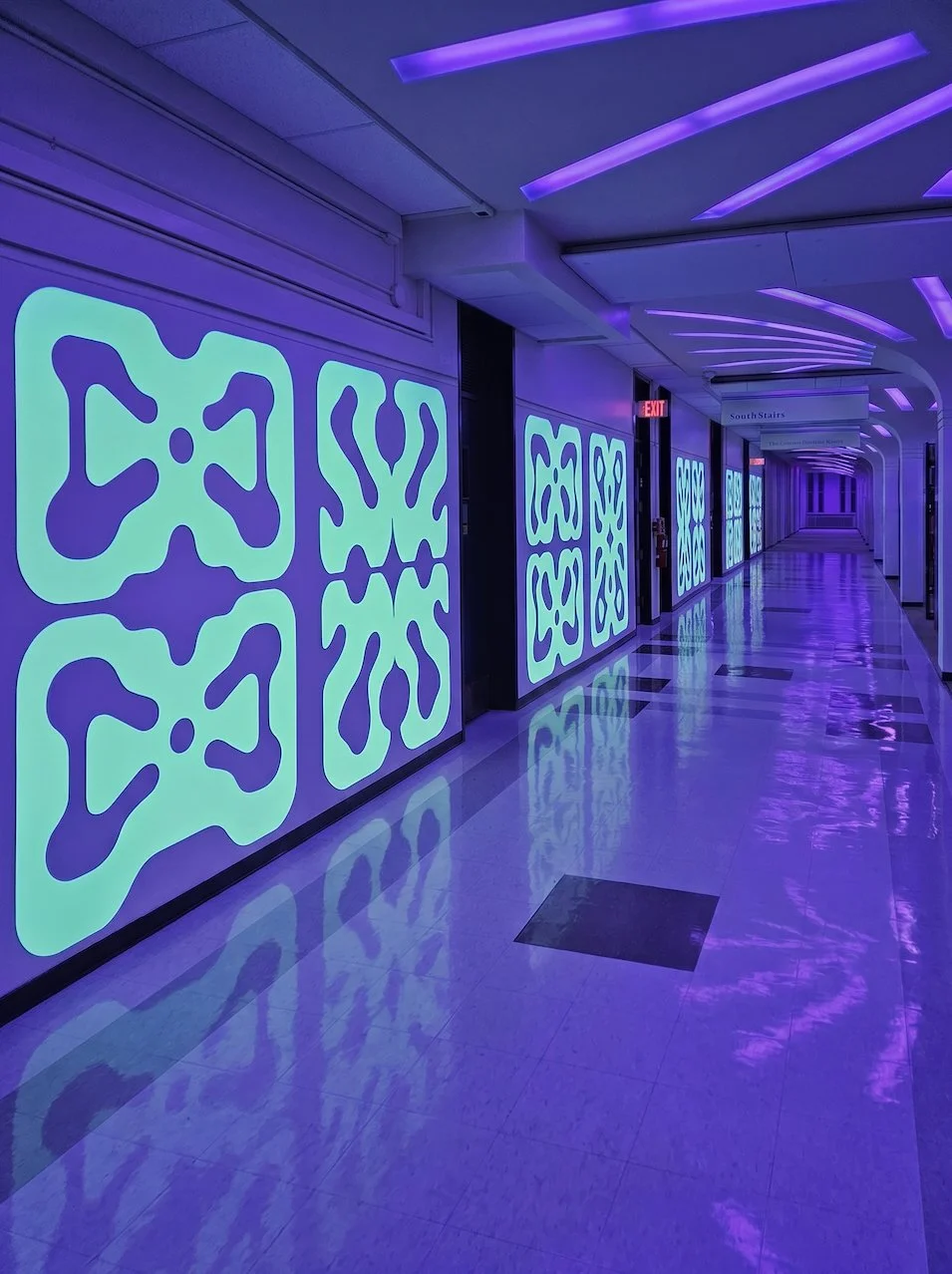
Organic forms cut from vinyl run the length of a library corridor, vanishing into the walls under ordinary white light. When the hall is empty, the light shifts to violet and the hidden shapes glow brightly. This visibility is guarded by motion sensors acting as an automated defence mechanism. The moment someone enters, the violet light flicks off and the forms disappear before they can be seen. This vanishing act mirrors a tactic by Andy Warhol in the 1960’s, who manually switched off black lights to hide his ultraviolet queer artworks from police raids. Automating Warhol's switch connects the historical policing of queer art to the modern censorship of queer literature, just as libraries face growing pressure to ban books. The installation shows that queer presence has always existed in spaces like these, quietly kept off the record or hidden in plain sight. The forms are there the whole time, and nothing is added or taken away. What changes is simply whether the system allows you to see them.
Torch ‘26
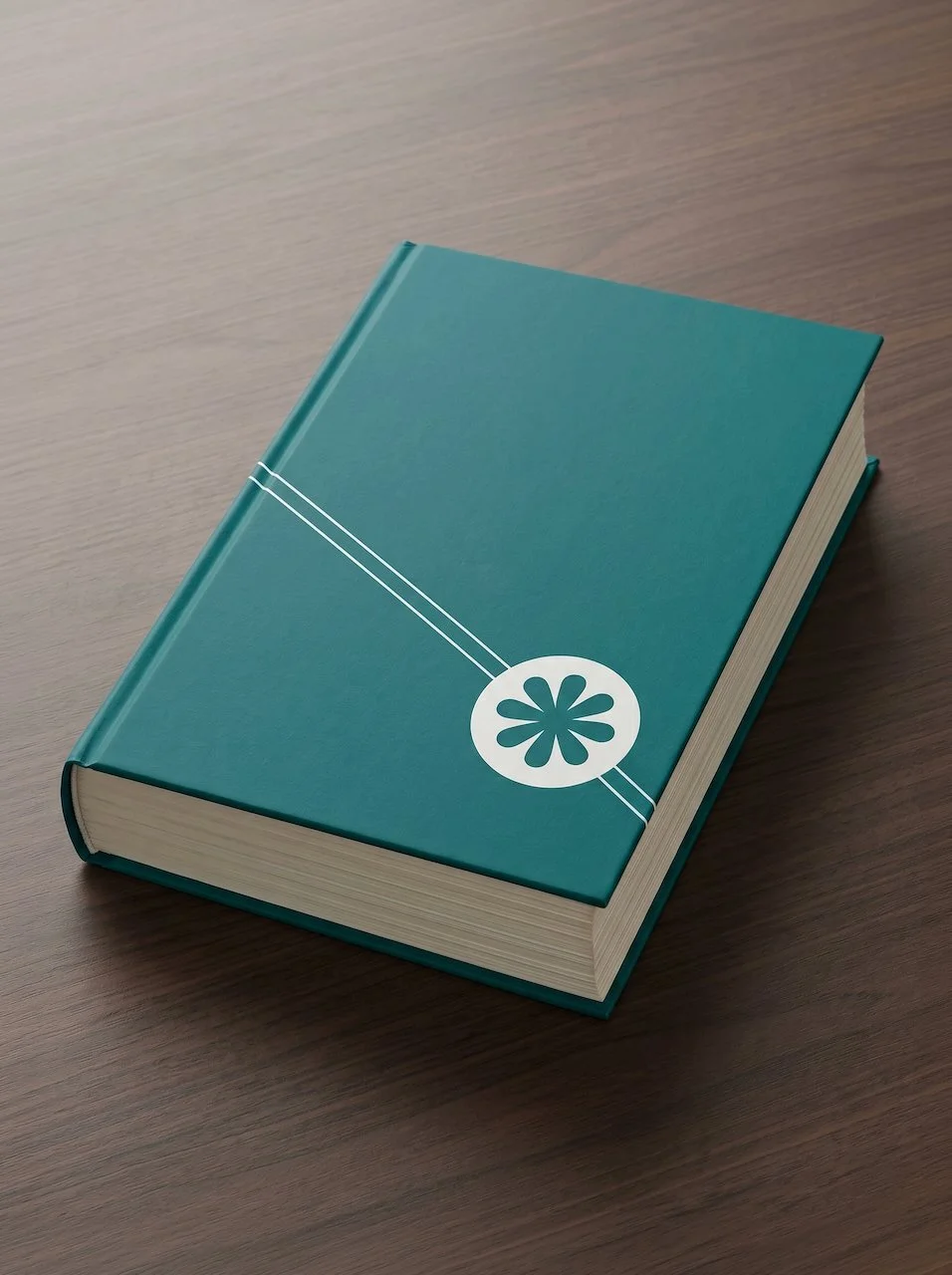
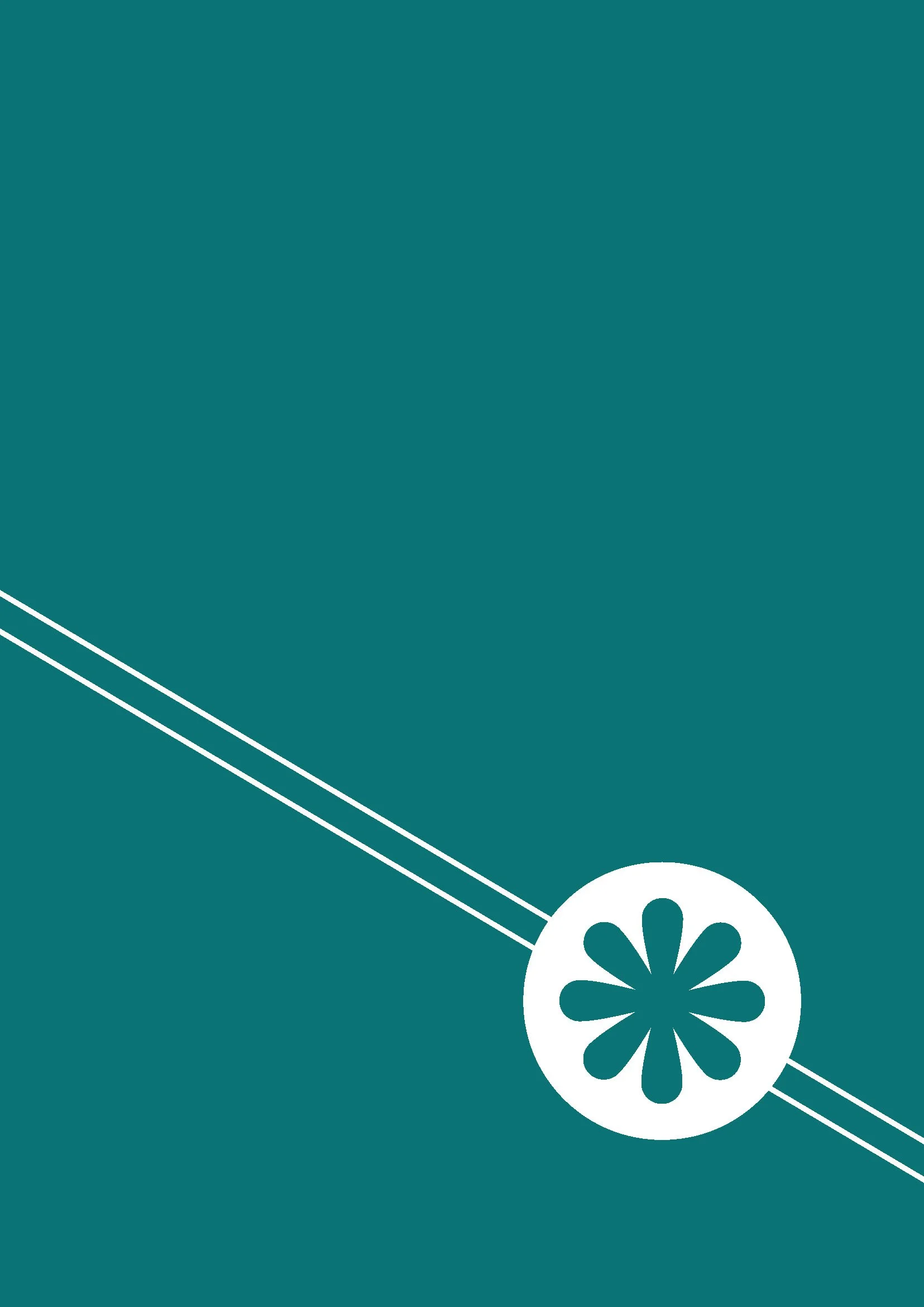
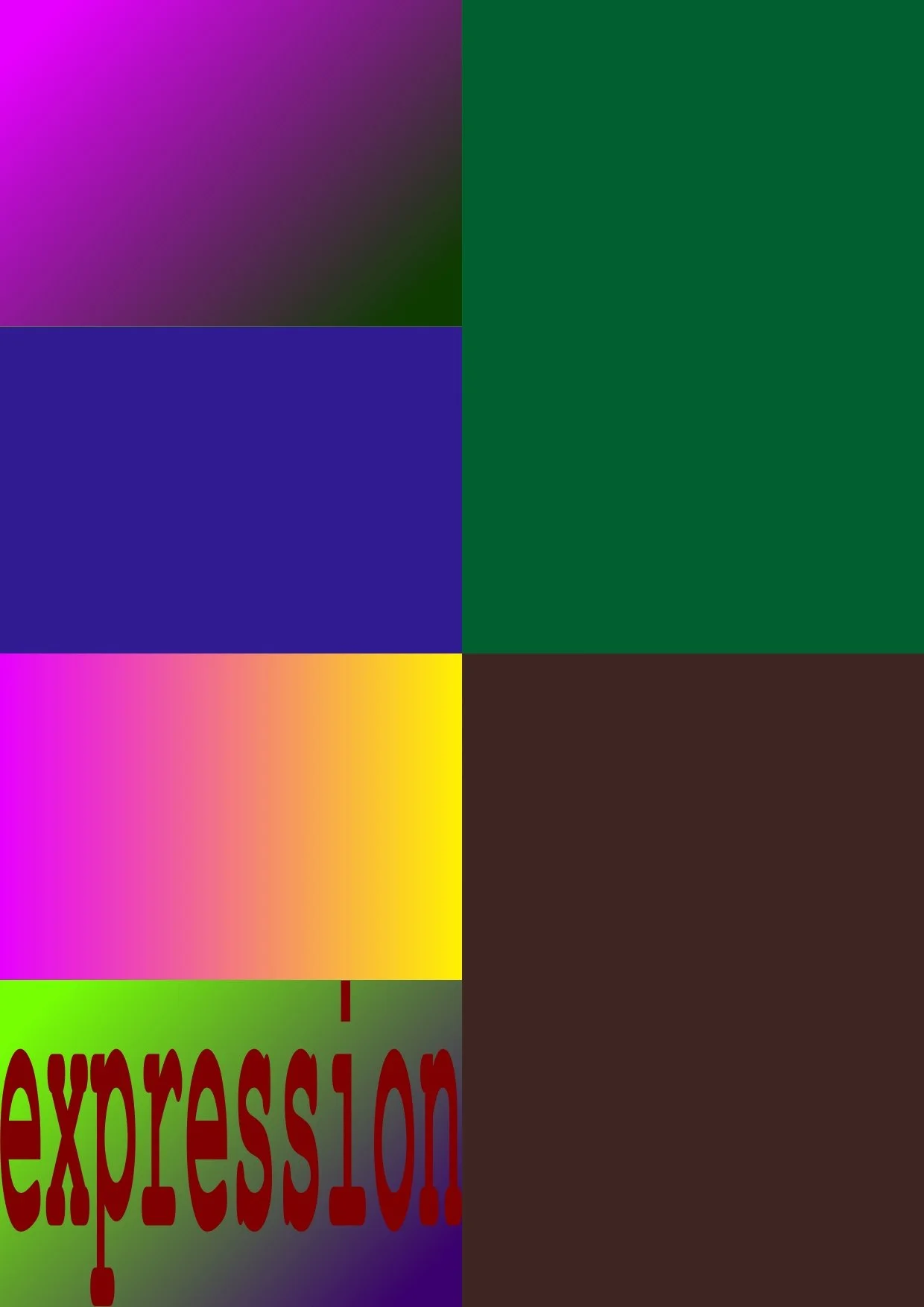
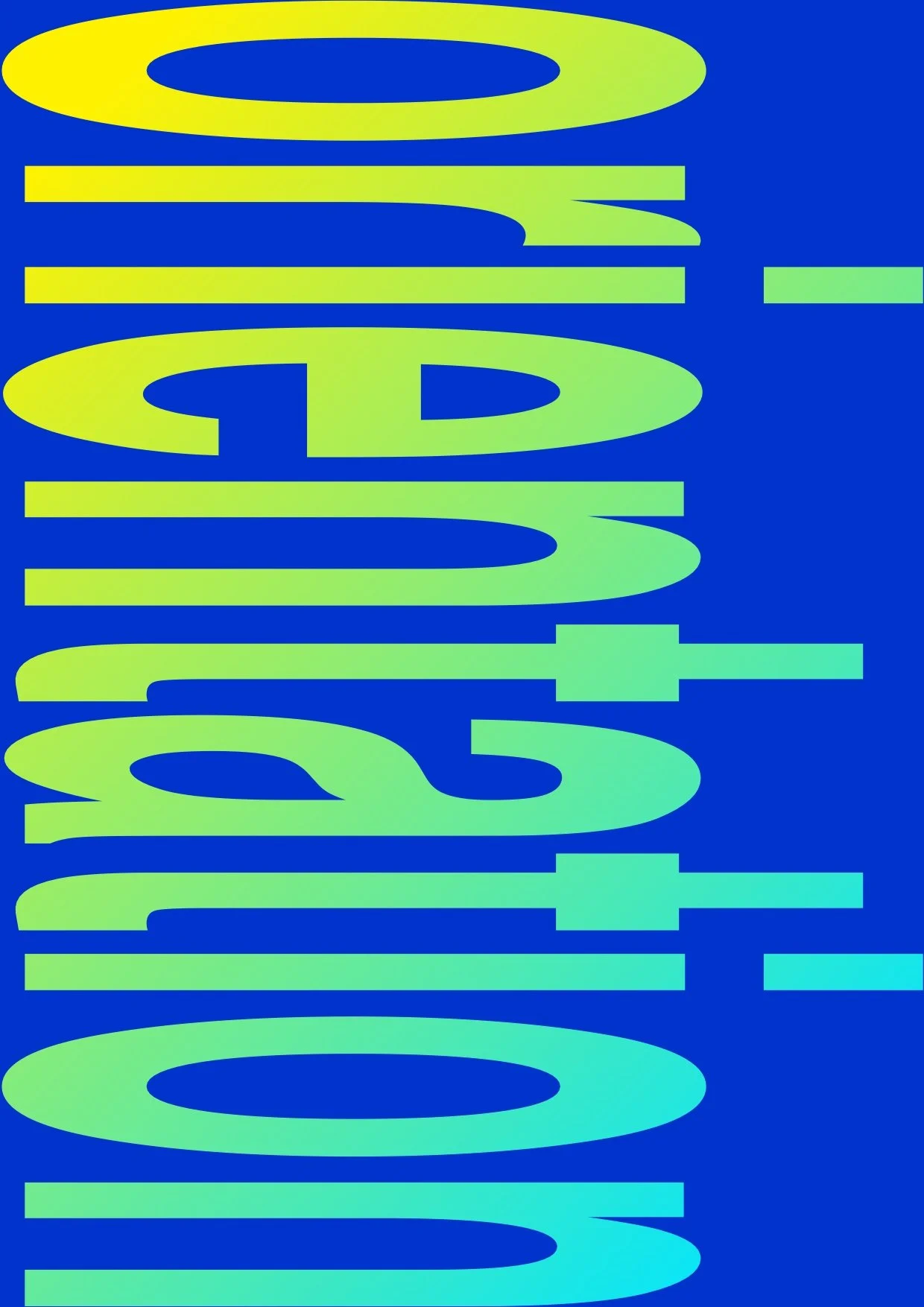
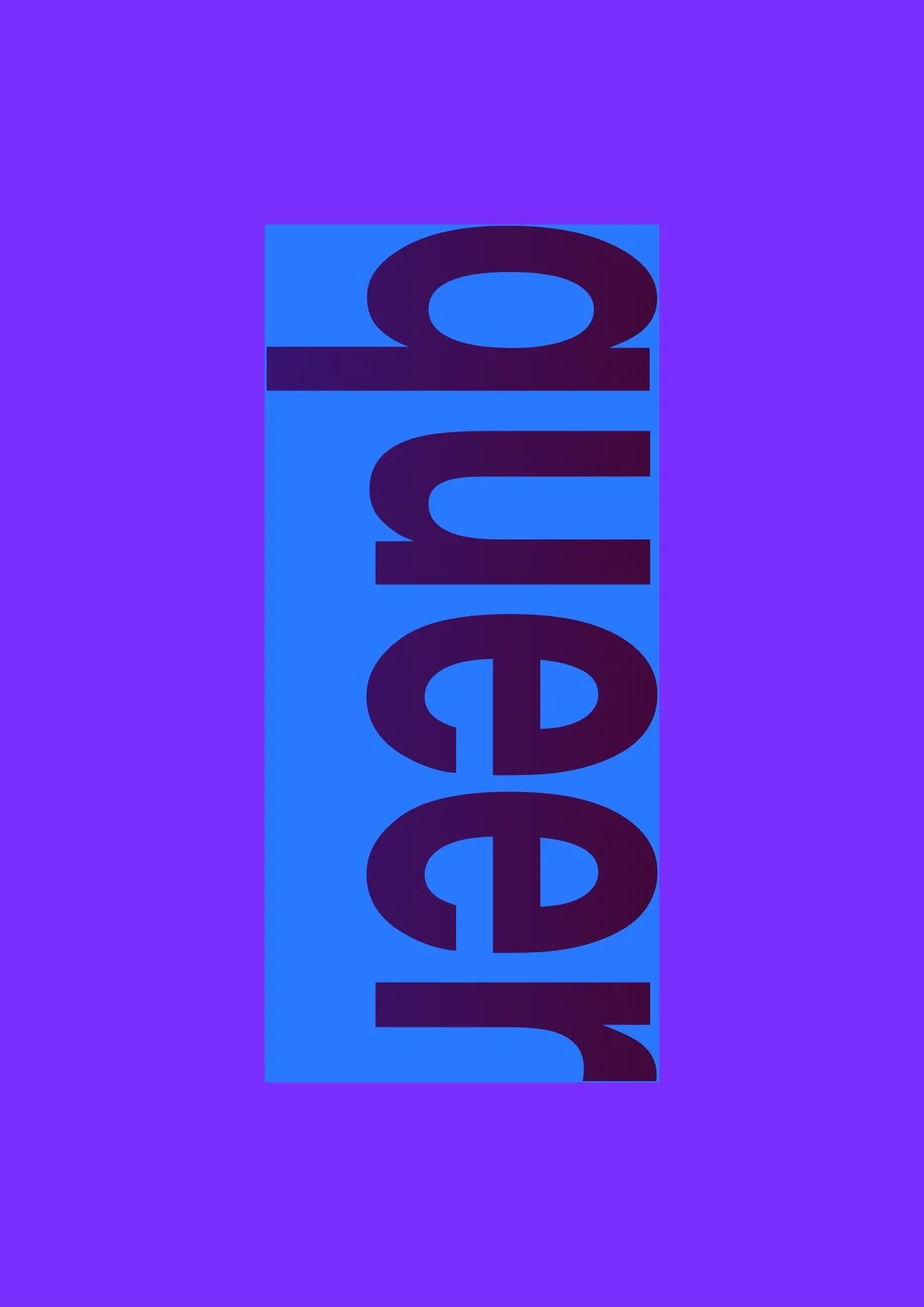
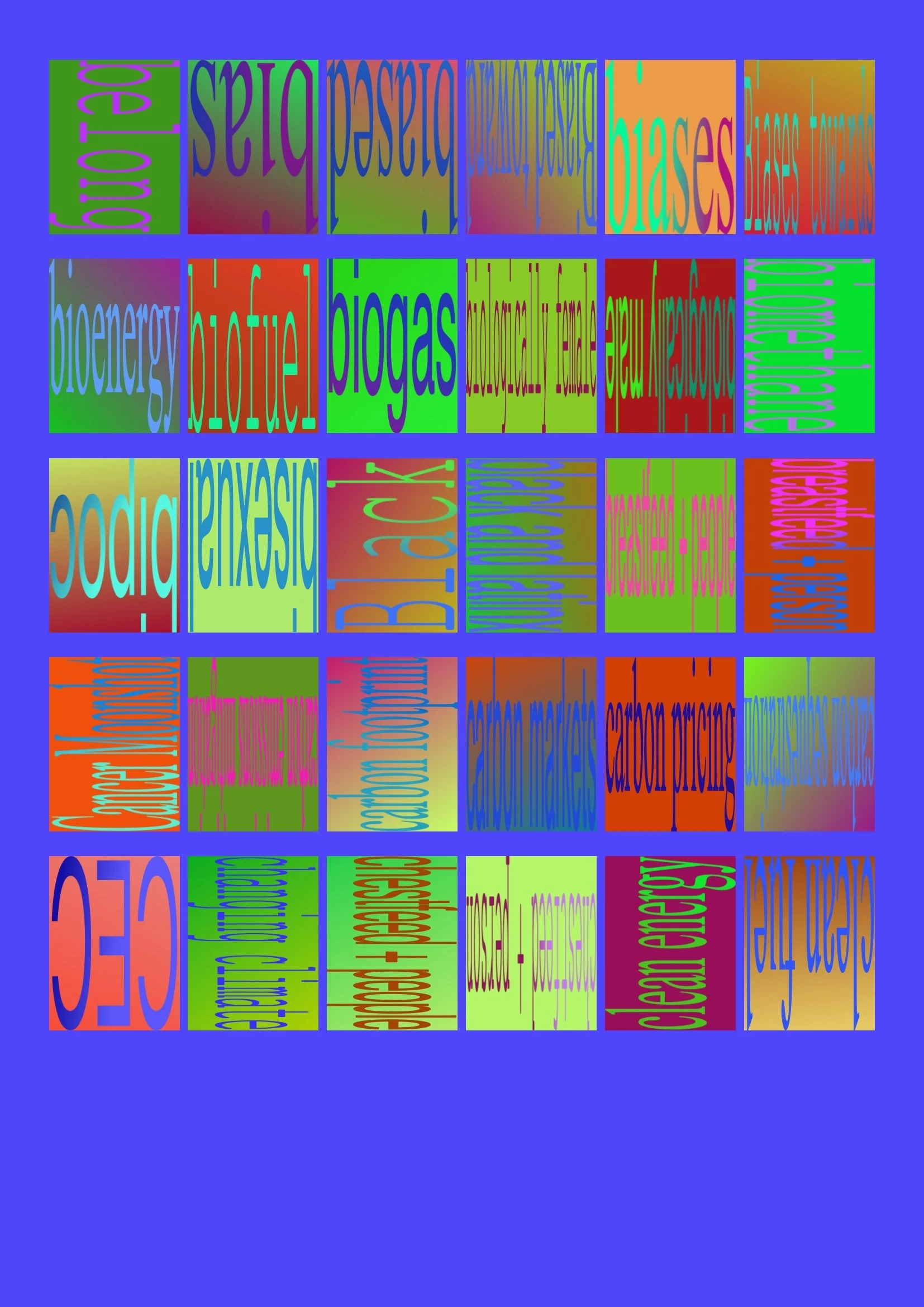
Torch '26 is a reworked yearbook, made as both a printed book and an online edition. Local queer communities have rebuilt Torch ‘72 from the inside, holding to its original layout, fonts, and pacing while remaking its colour, detailing, and text. Where the 1972 book was filled with photographs of student life, this version replaces those images with words. Each page carries a single term banned or flagged by US federal agencies, over 350 in all, drawn from the list PEN America has compiled from many sources. Turning the pages, you move through the vocabulary being quietly scrubbed from official language today. That act of gathering matters. As these terms are stripped from federal websites, grant records, and curricula, the book holds them intact in a place built to protect them. University libraries have always defended intellectual freedom and critical thinking, and Torch '26 uses that protection to keep these words, and the queer lives bound up in them, firmly on the public record.

From Many
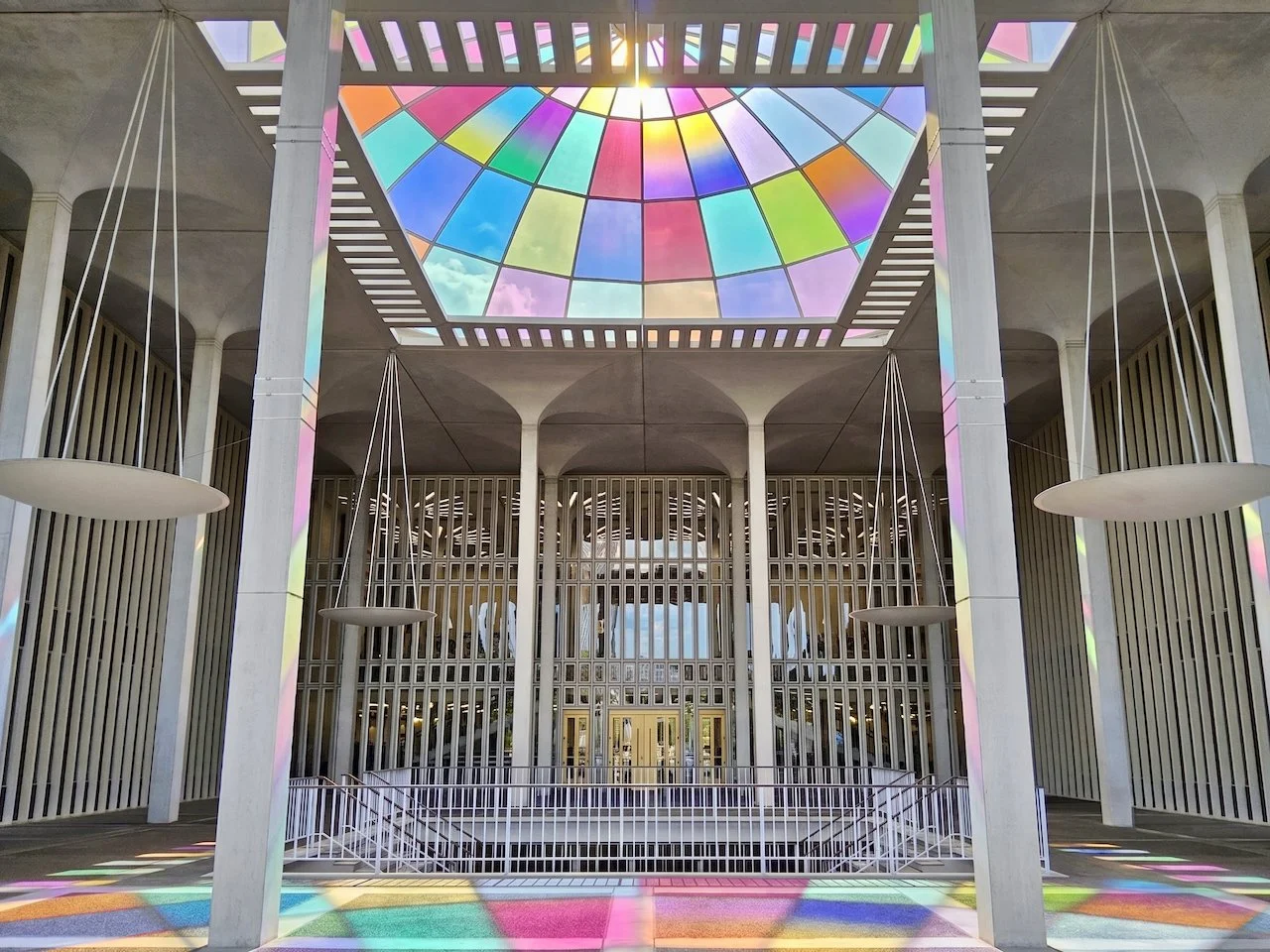
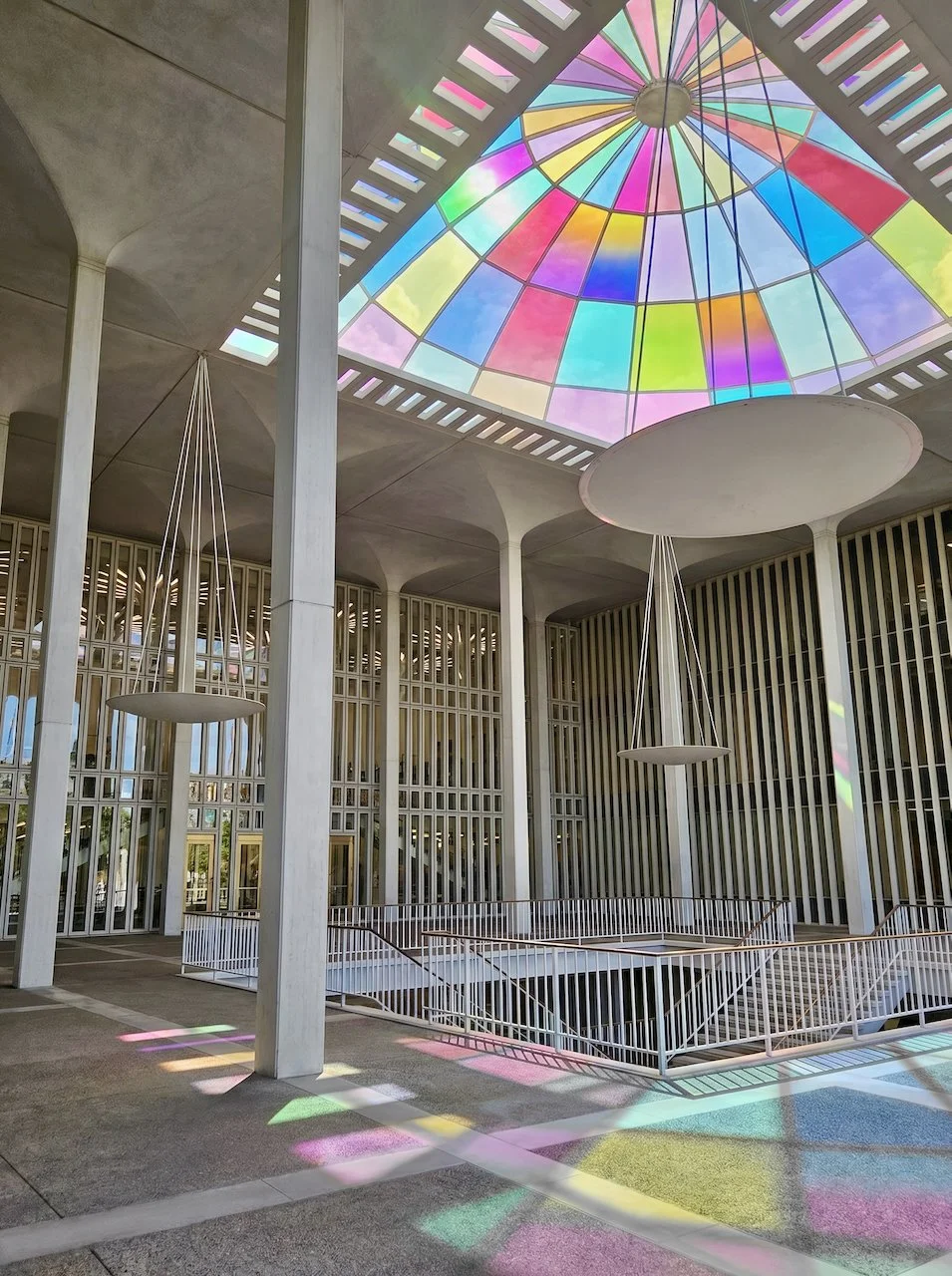
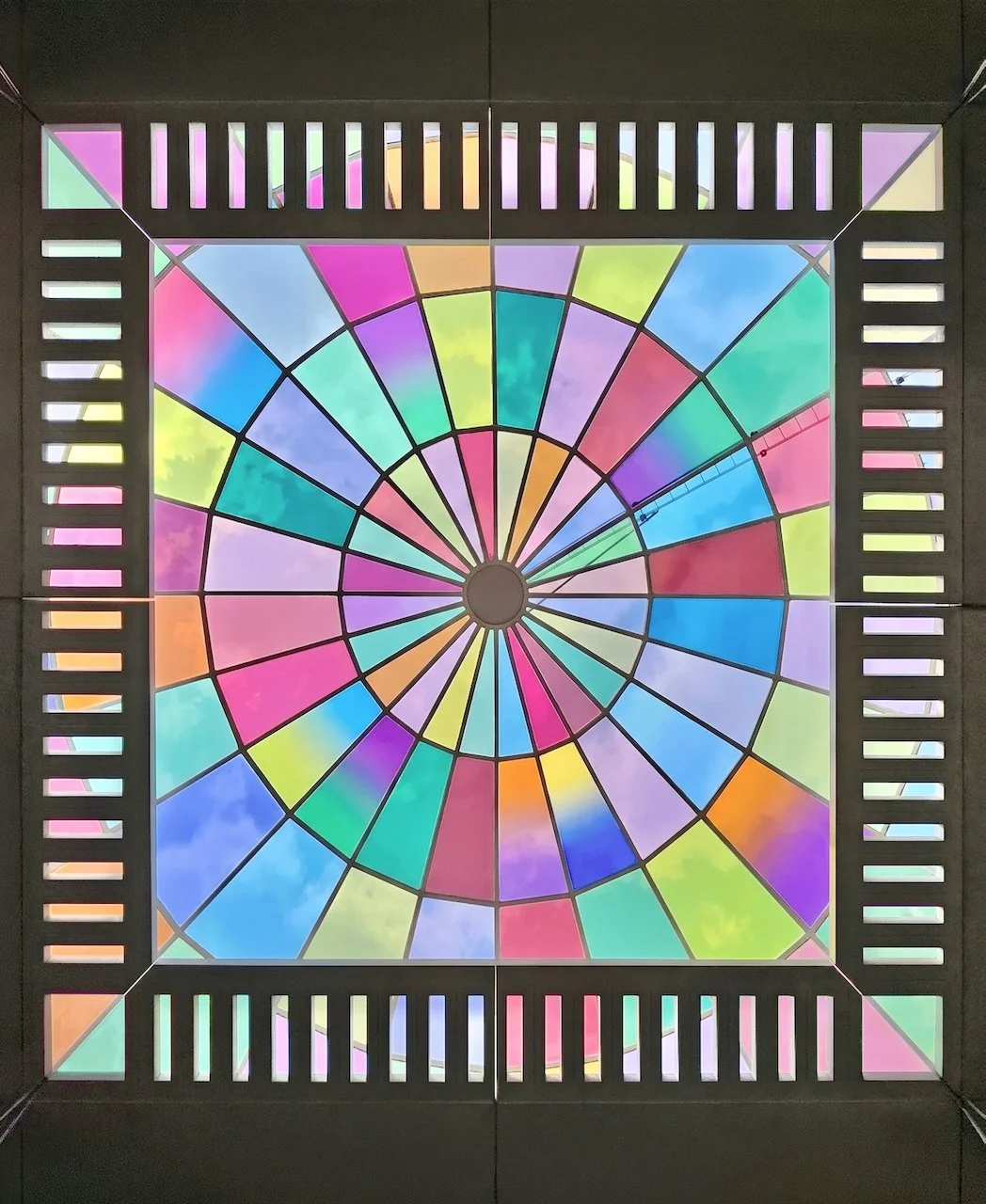
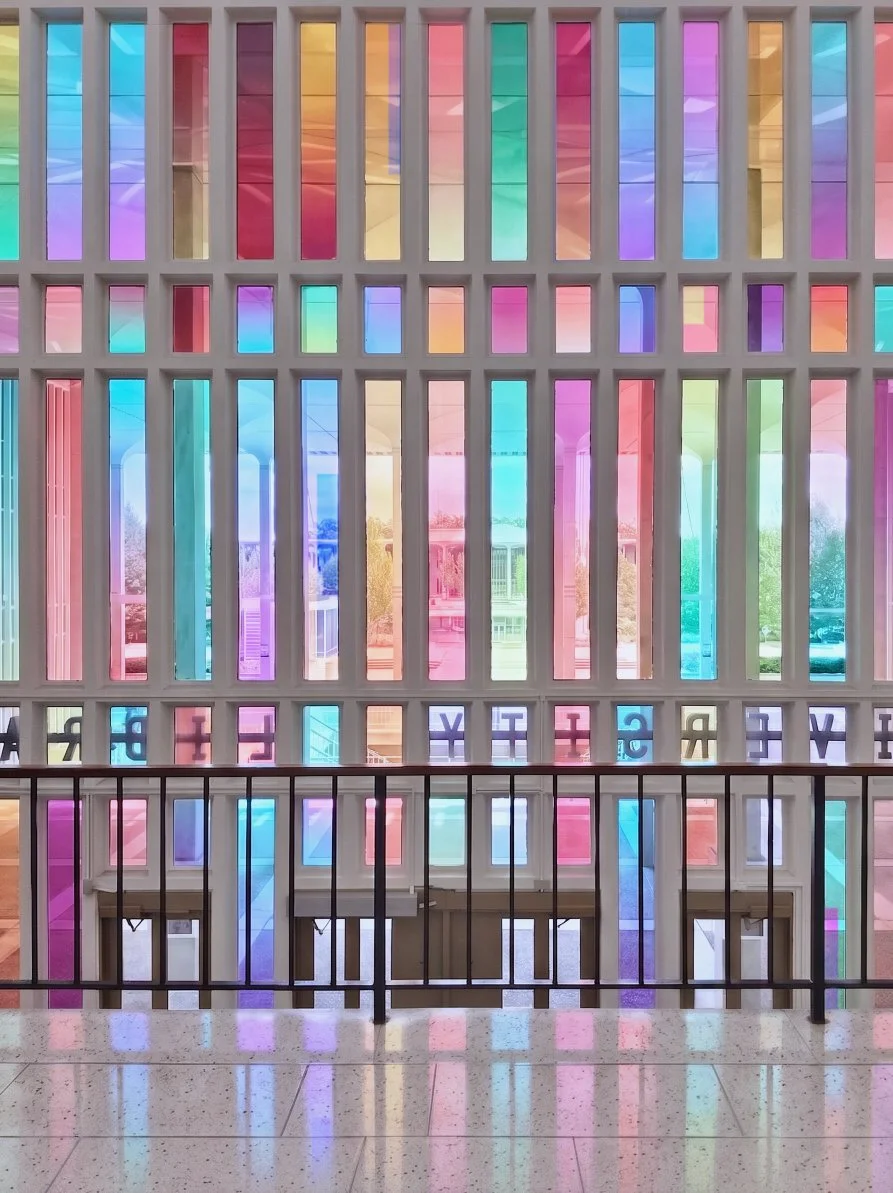
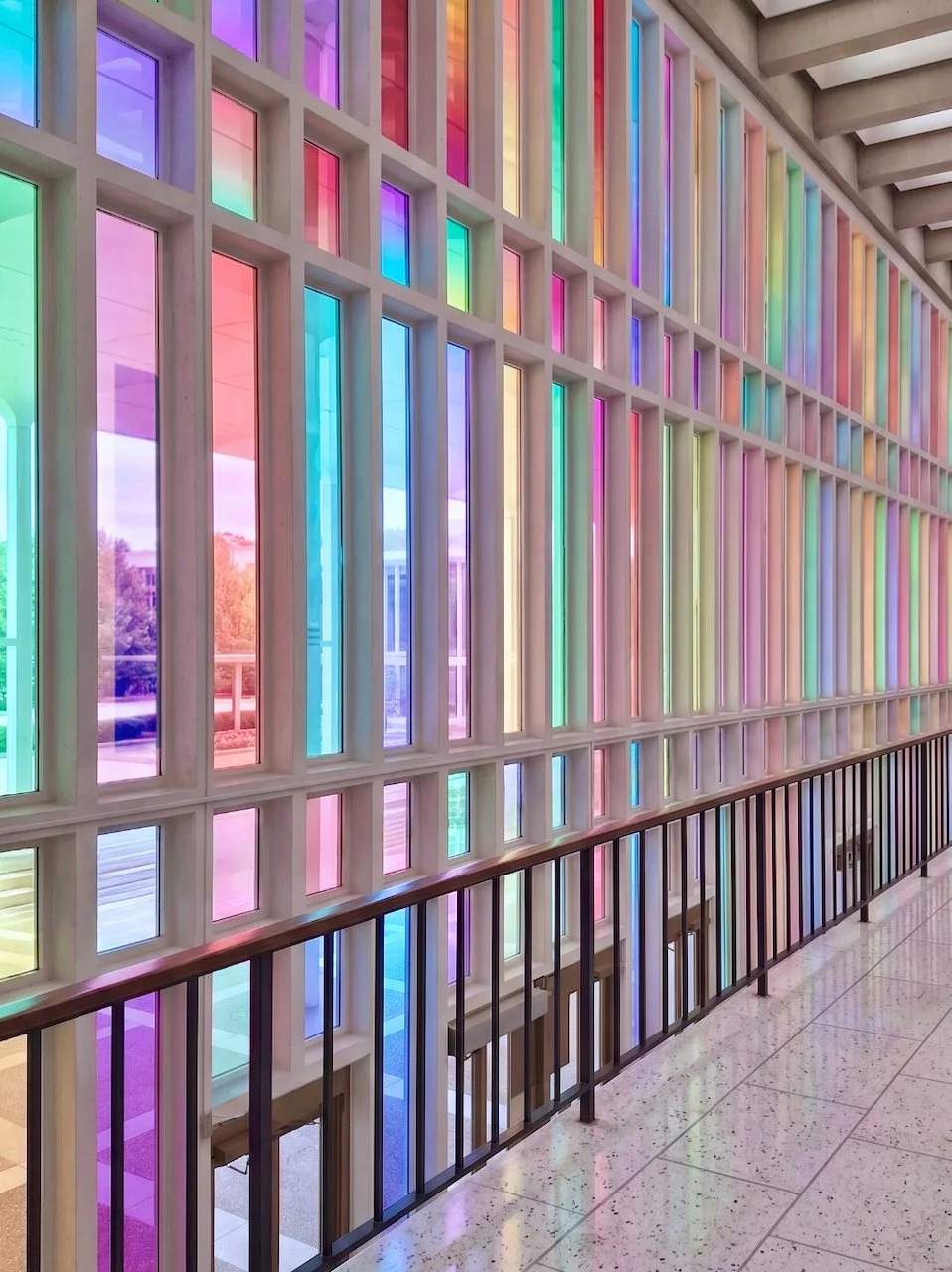
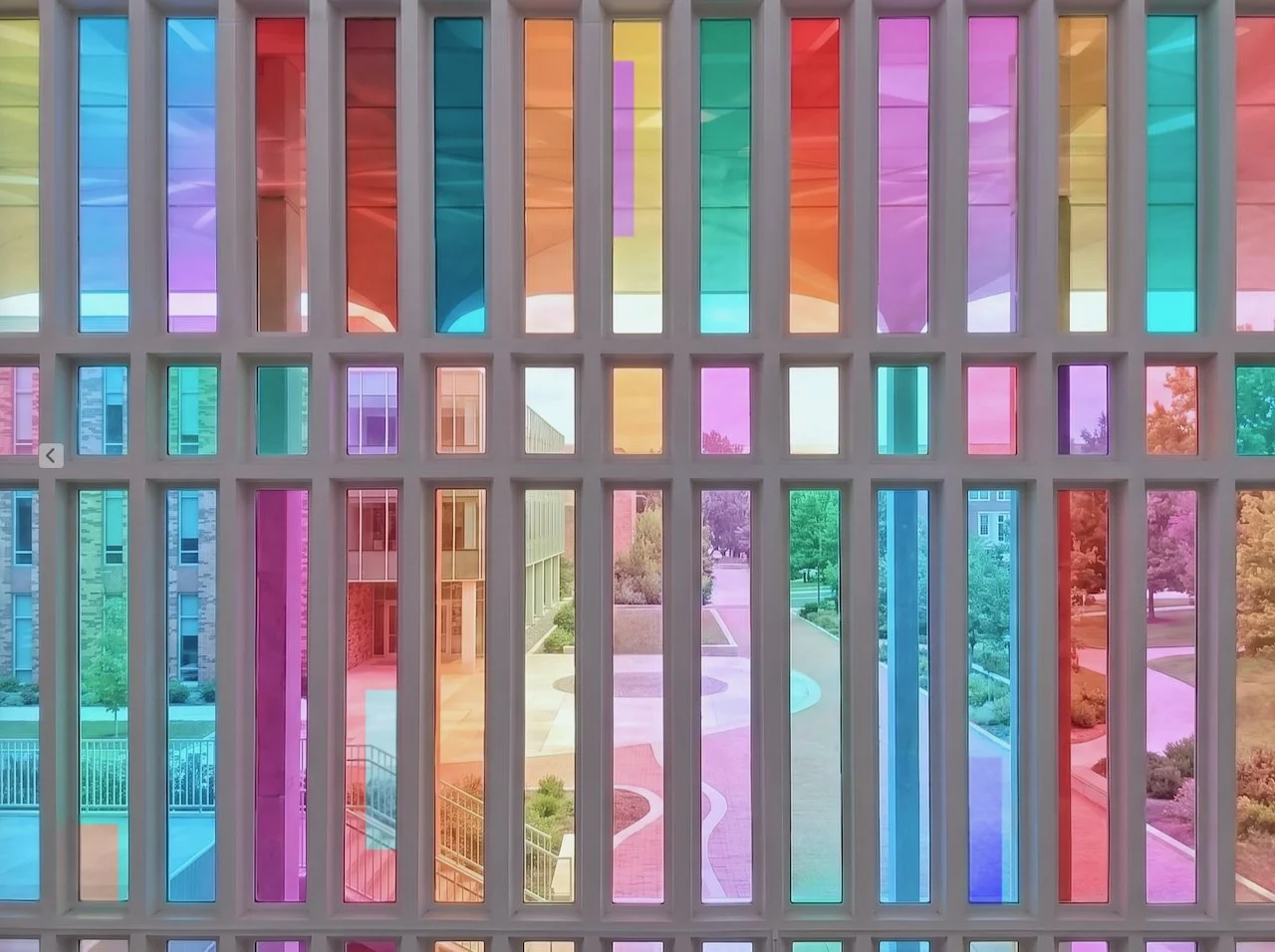
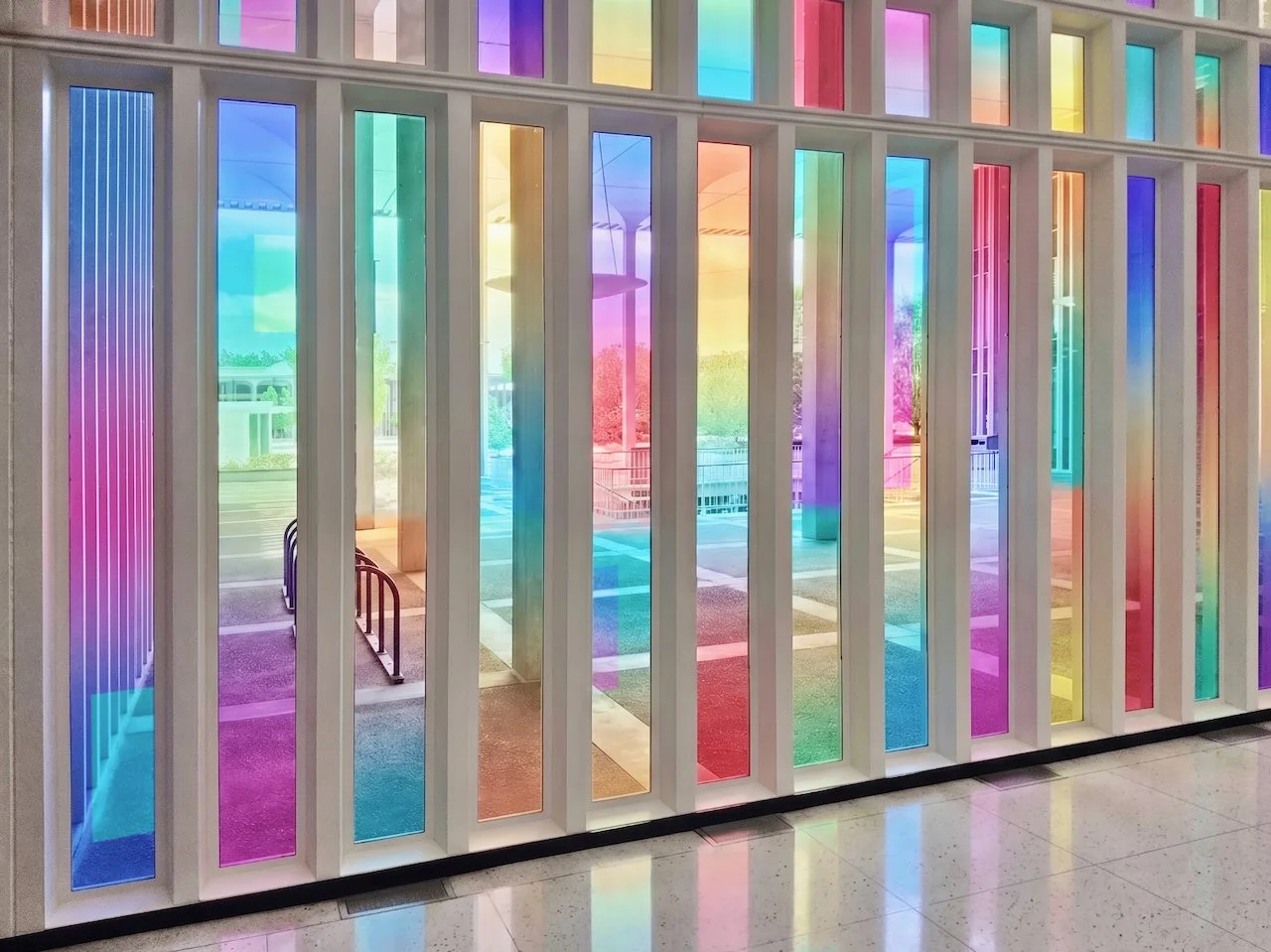
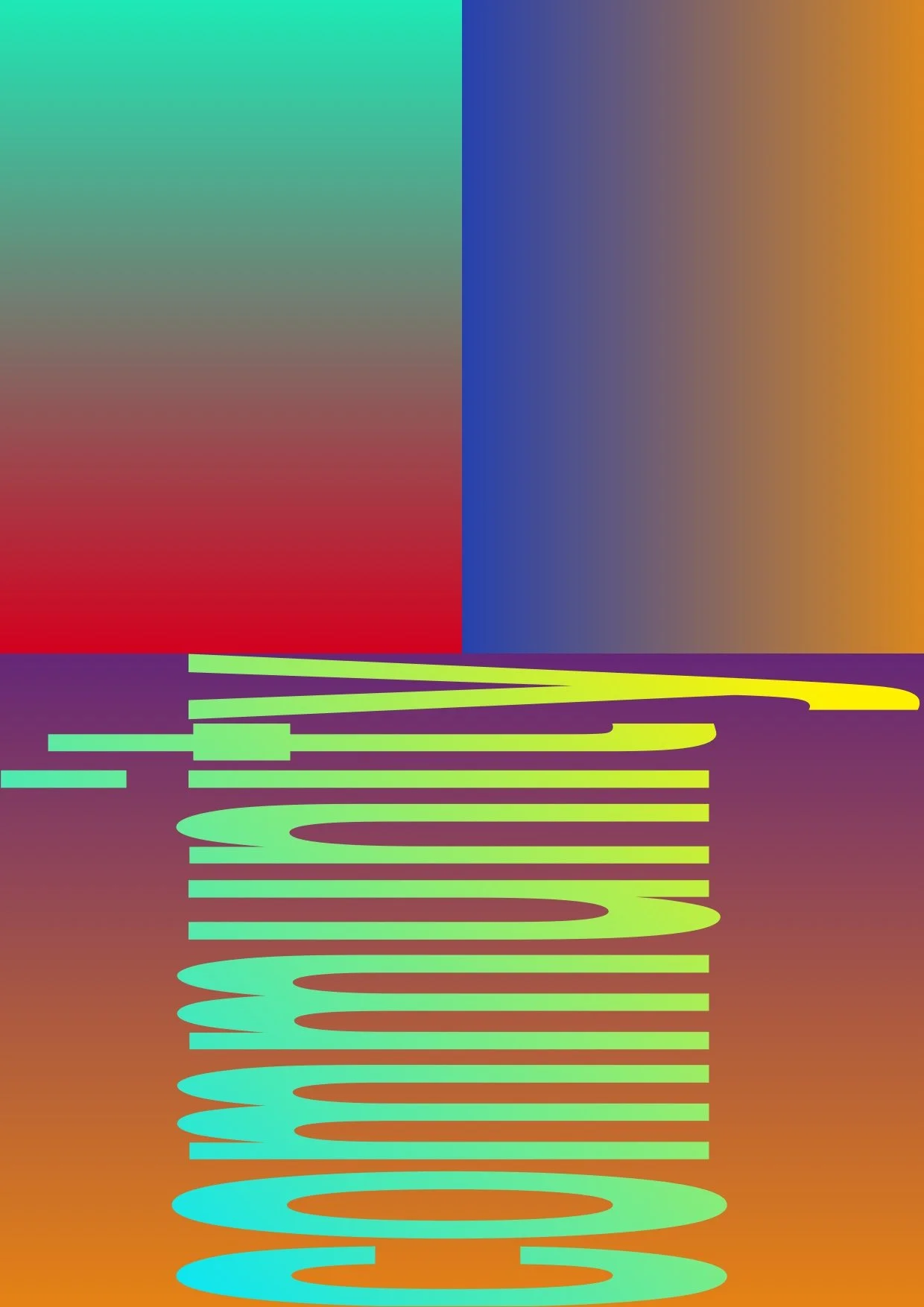
Transparent vinyl covers the library's entrance windows and the dome above. Sunlight passes through and turns to colour, washing across the floor, the walls, and everyone who walks in. Where the other works deal in hiding and removal, this one does the opposite. It's loud, open, and set at the threshold everyone crosses to enter. The colour shifts through the day with the sun and never settles, so it can't be quietly taken away. It's a welcome and a refusal at once, insisting that queer presence stays bright, visible, and right where everyone can see it.