A Short Crisp Sound
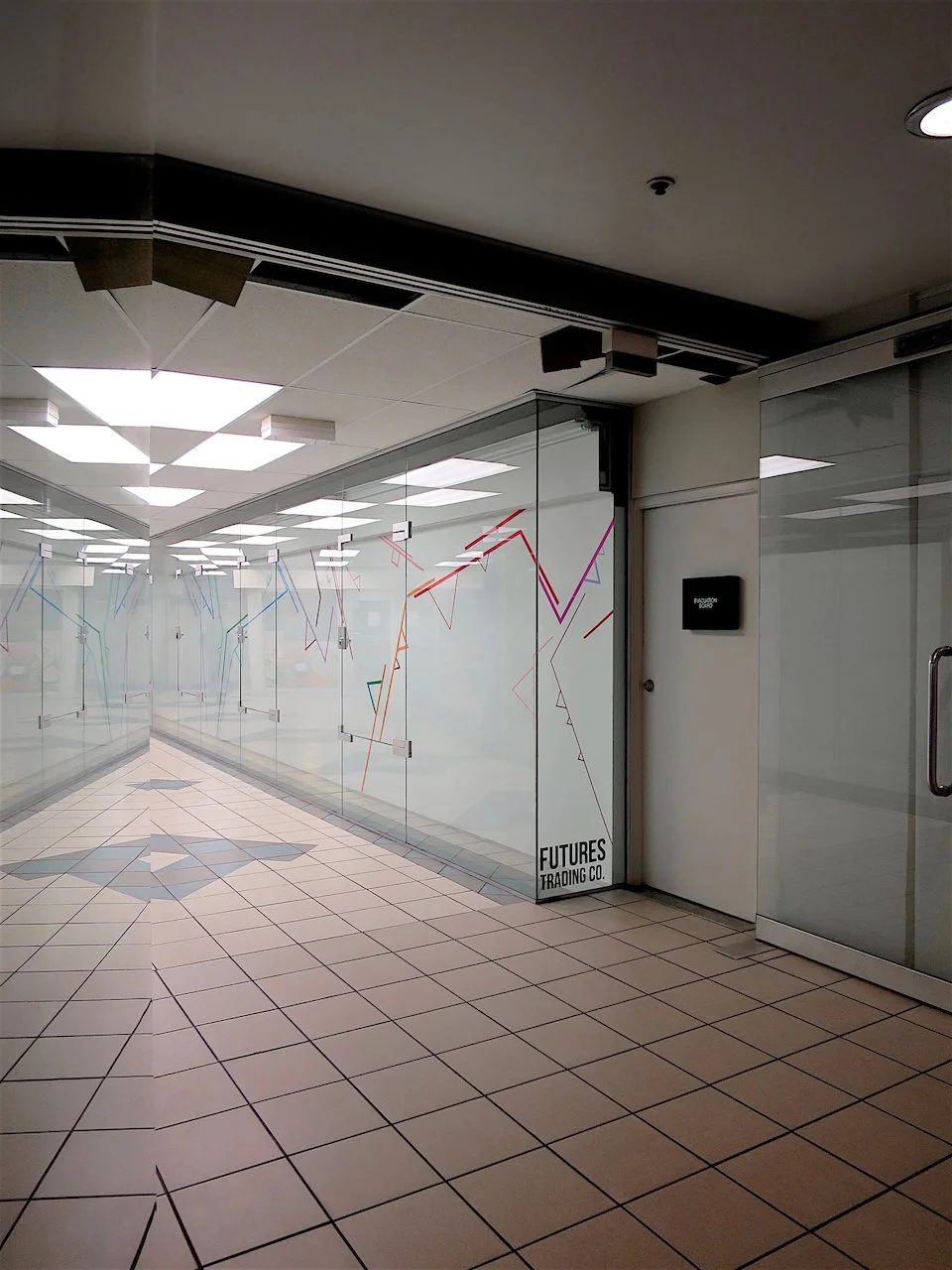
Futures Trading Co., Wellington, New Zealand, 2014
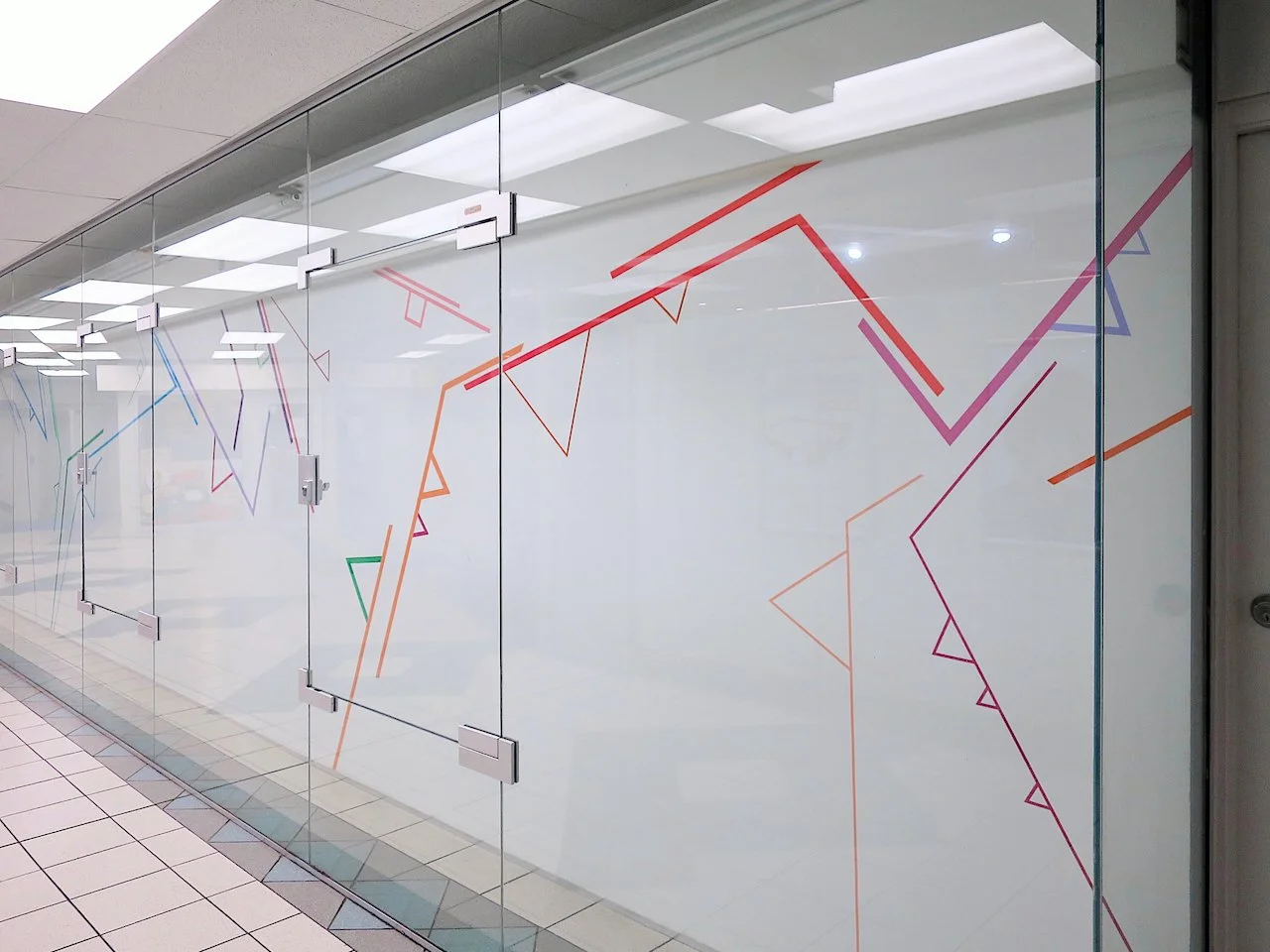
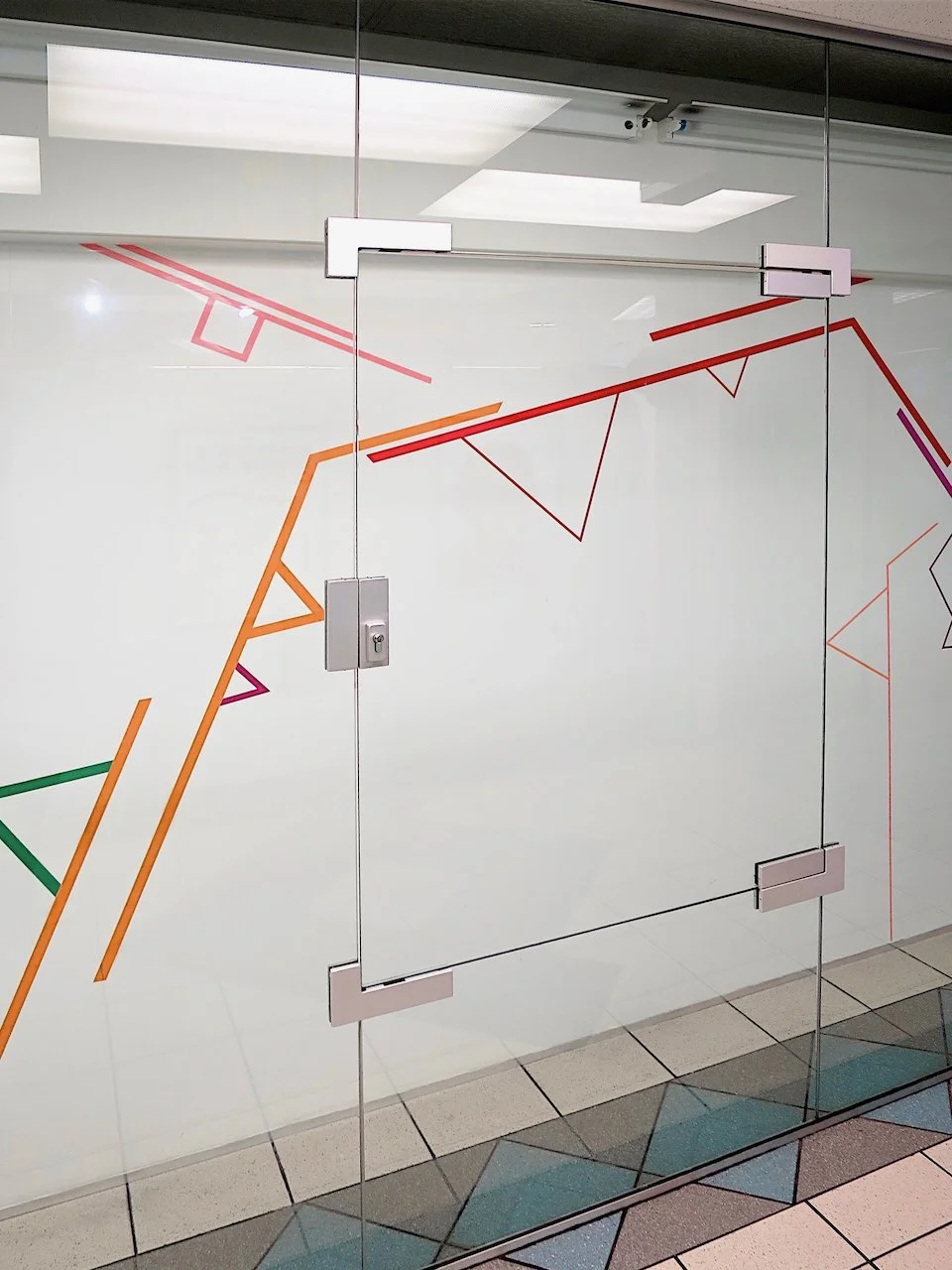
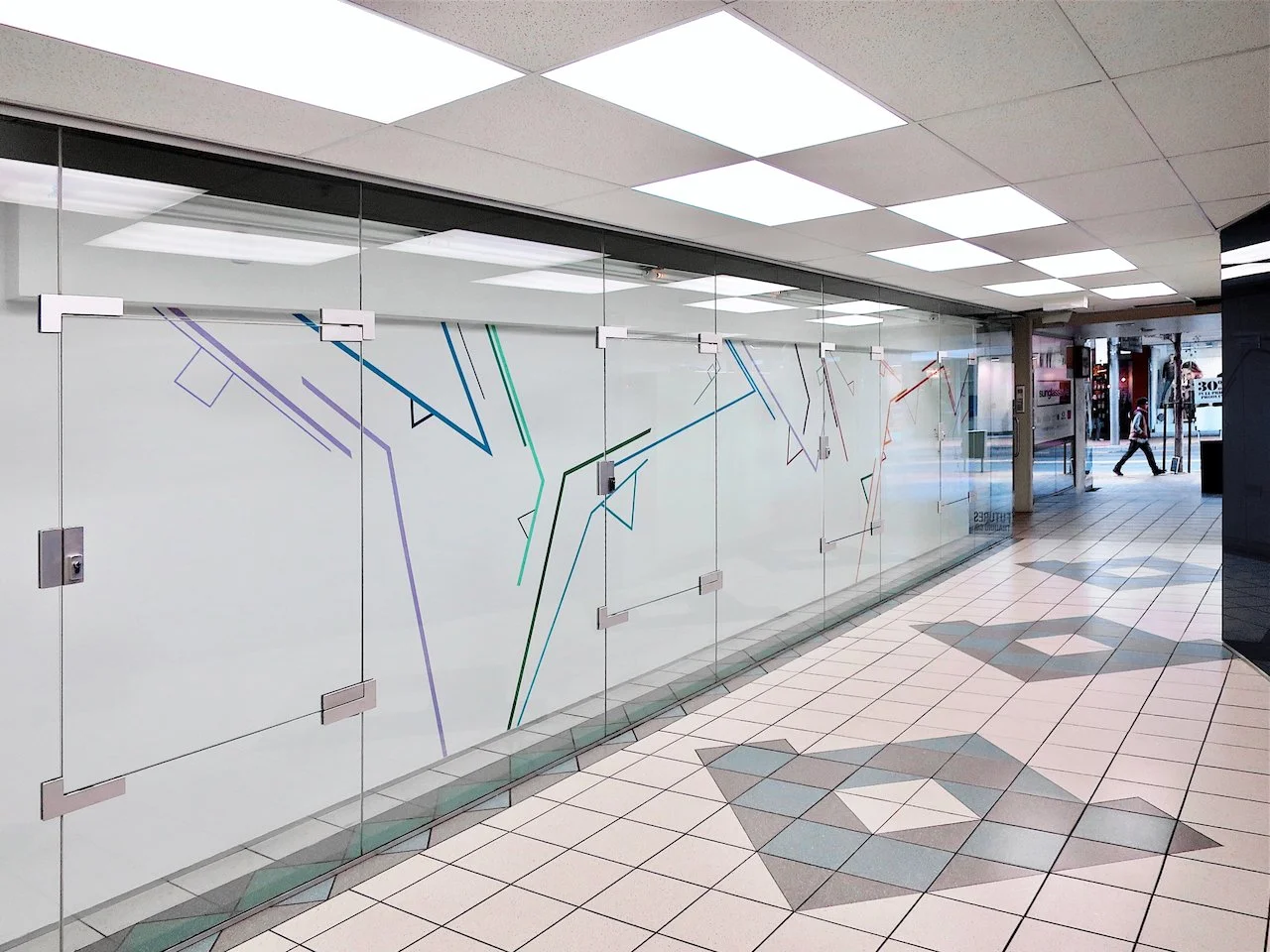
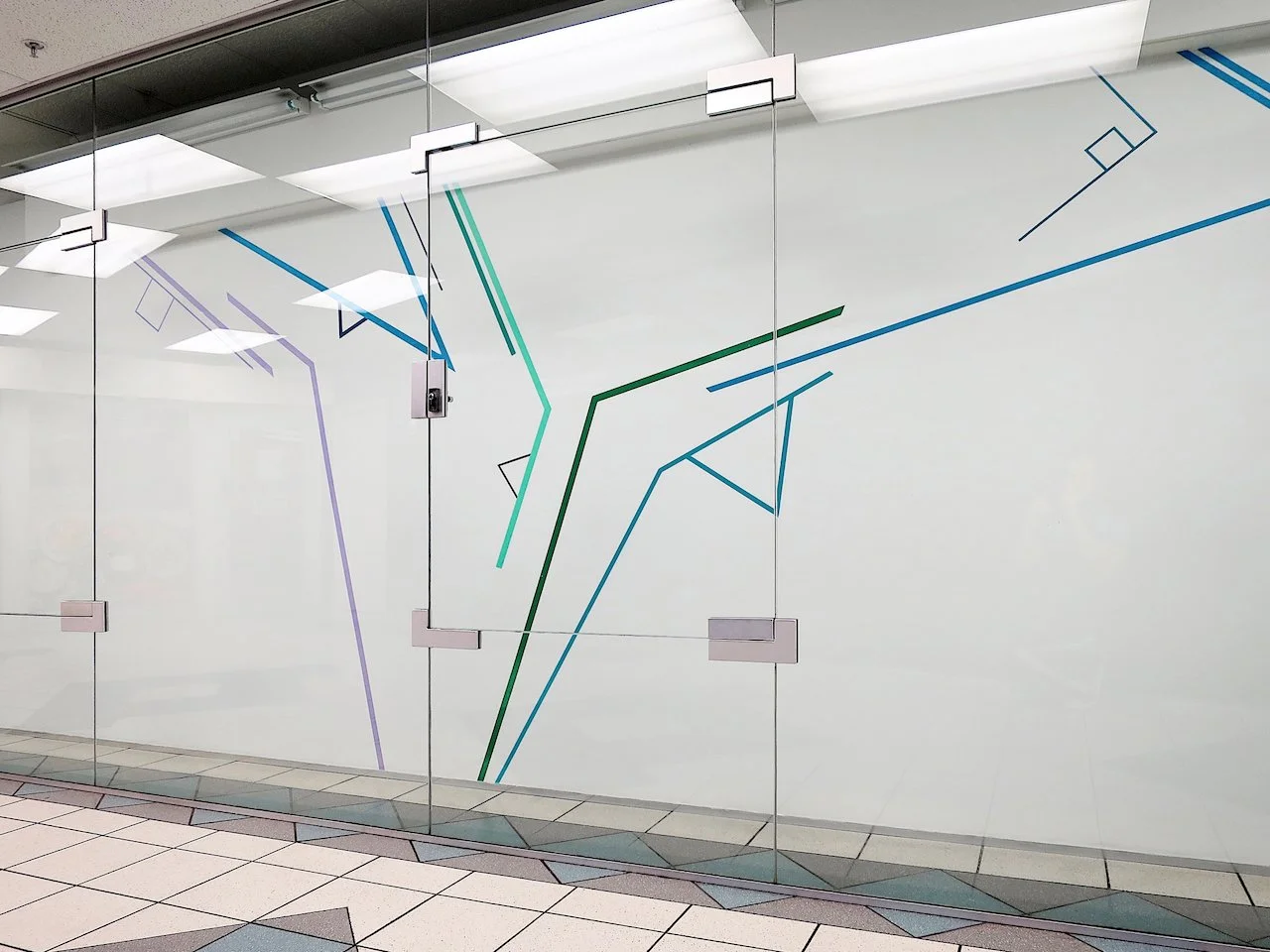
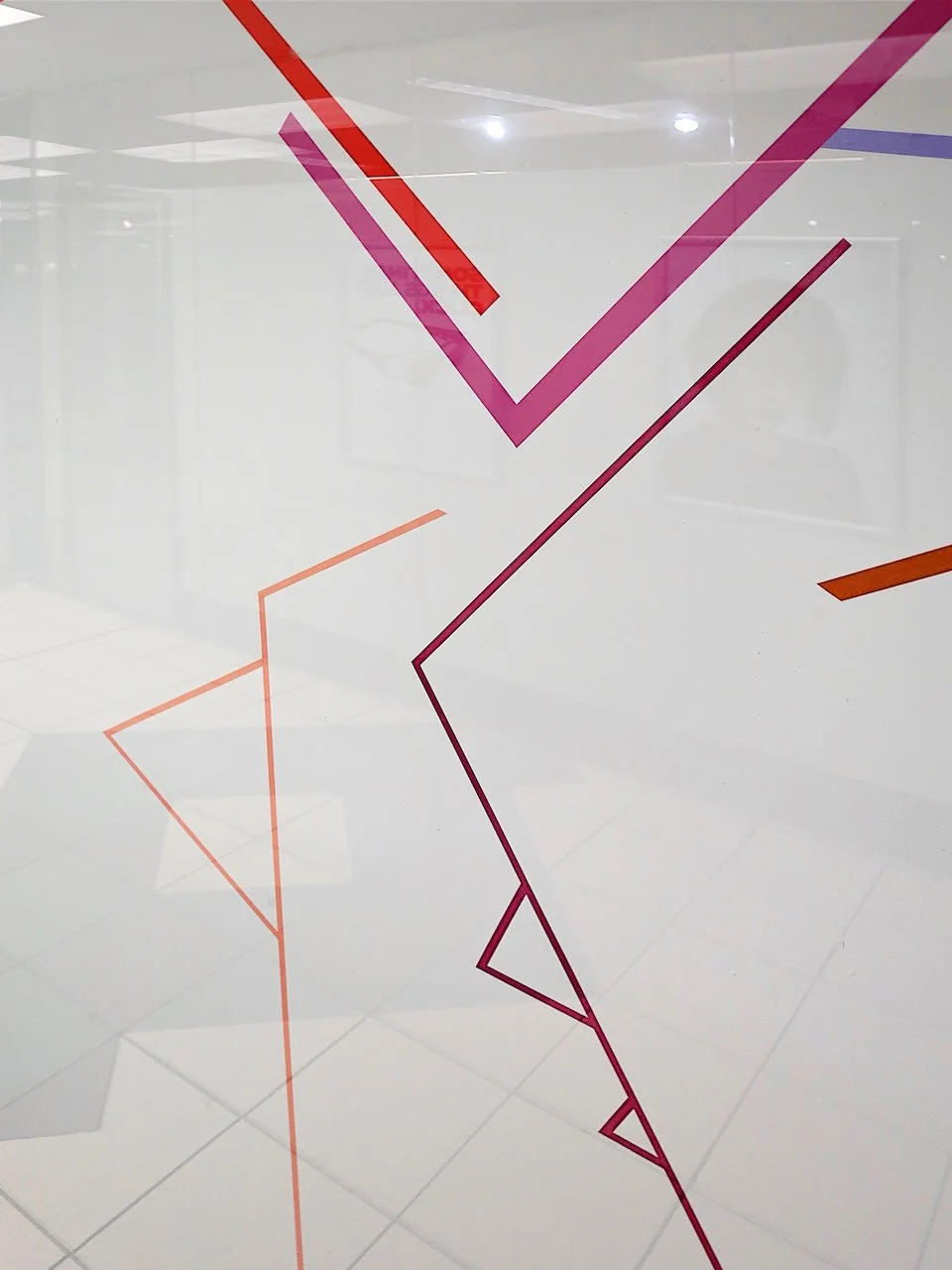
Drawing from Richard Artschwager’s late-1960’s “blp” interventions, which used a simple oblong form to redirect attention toward overlooked details in everyday spaces, this work considered how abstraction could act as a marker of presence. Artschwager later extended these gestures across New York during a retrospective at the Whitney Museum of American Art, placing blps on walls, windows, and doors to subtly interrupt habitual ways of seeing. Titled A Short Crisp Sound, a definition of “blip”, the work echoed this strategy through lines, colour, and geometric notation layered behind glass, using abstraction as a quiet signal to draw attention to local queer heritage in Wellington that was often unseen. Installed at 57 Manners Street, almost directly aligned with the former Cornhill Street where the Dorian Society established its first clubrooms in 1962, the work acknowledged a discreet yet vital social history that once existed just out of sight. Like a visual blip within the streetscape, it marked proximity to overlooked queer histories, allowing colour and form to register moments of recognition, continuity, and the subtle persistence of memory within the city.
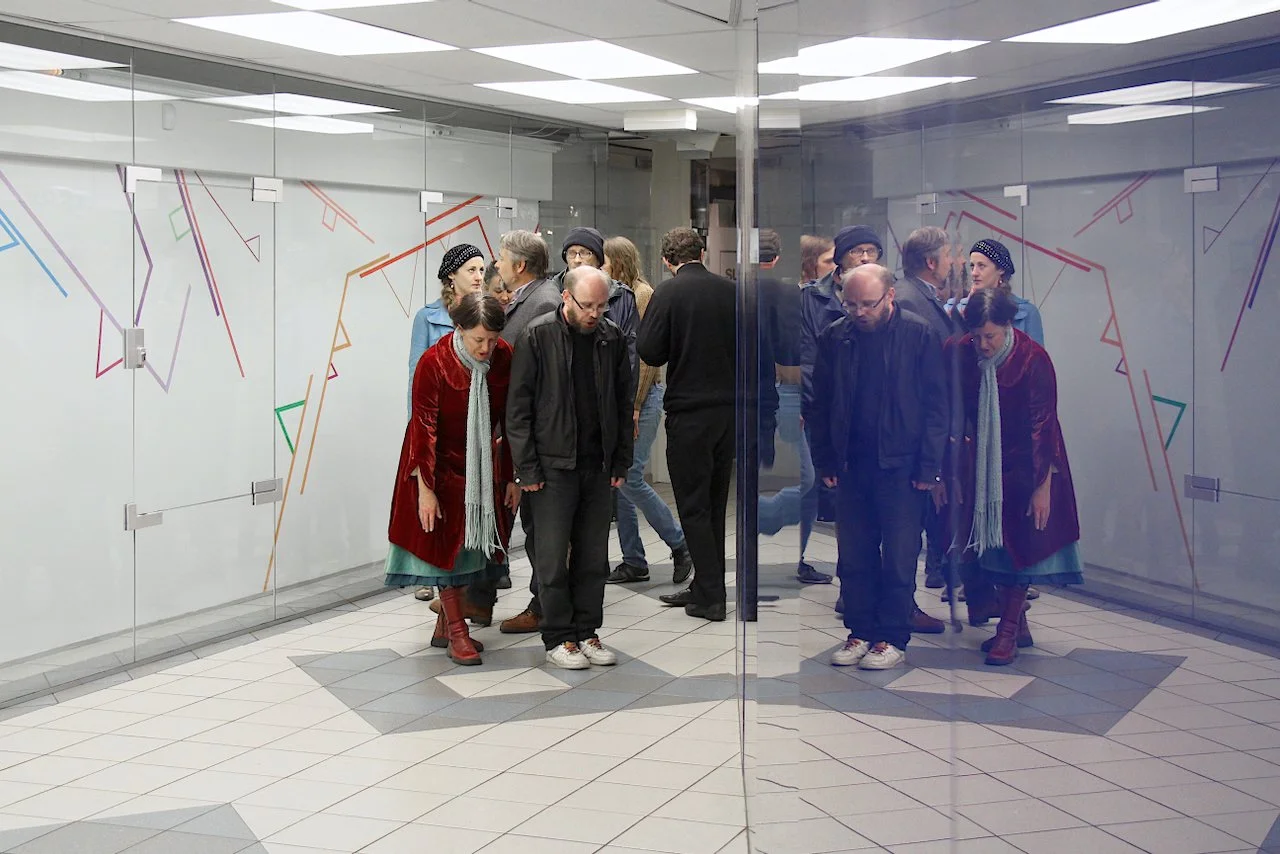
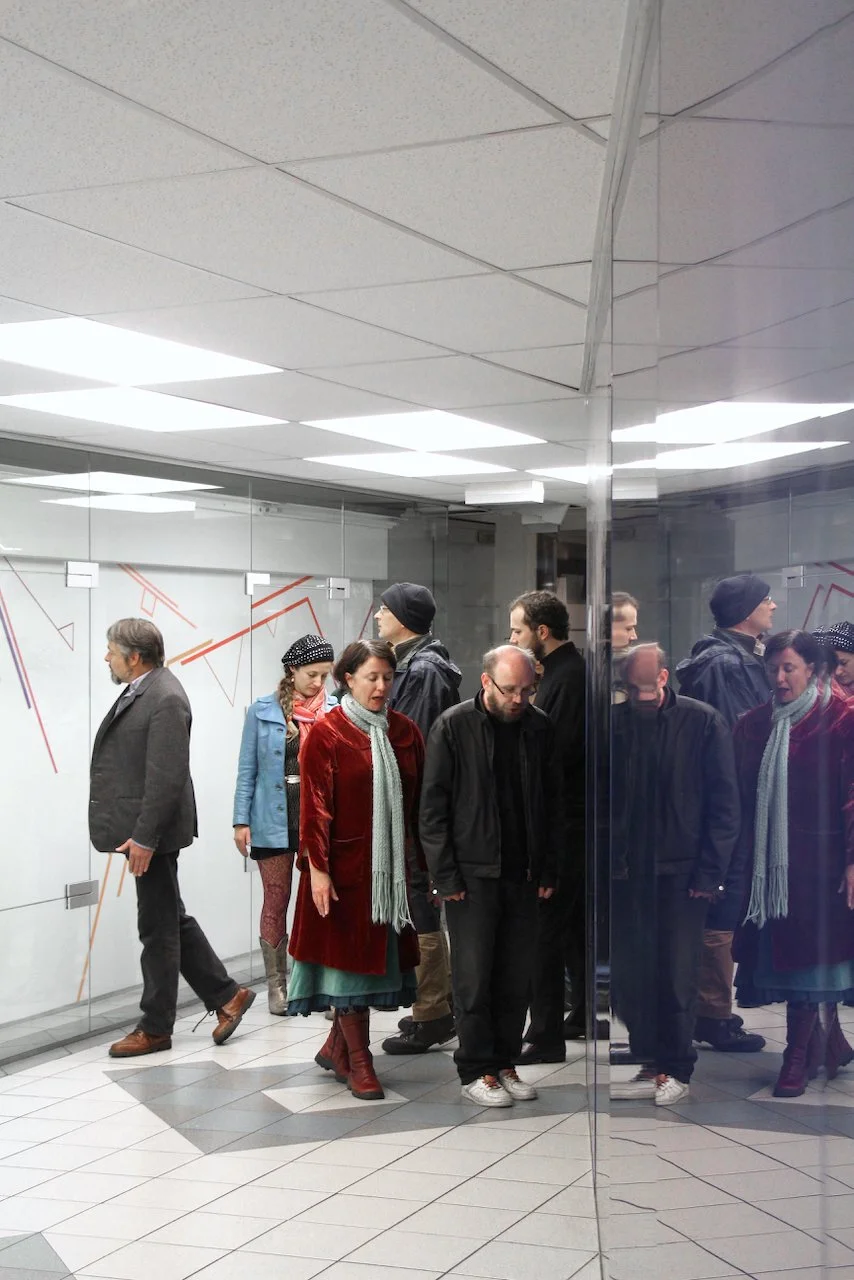
The Not Quite Quiet Choir, an experimental choir working with extended vocal techniques, improvisation, conduction, and graphic scores, performed in response to the work (pictured below).