Out of Vocabulary
Online, 2019
Out of Vocabulary looks at what happens when a text-to-image system meets a word it doesn’t know. It uses AttnGAN, developed at Microsoft Research in 2017 and one of the first text-to-image models the public could use, through the RunwayML app from 2019. When a word falls outside AttnGAN’s vocabulary, the system doesn’t flag it or ask. It drops the word and carries on as if it was never typed.
AttnGAN learned to draw from Microsoft’s COCO dataset: 123,287 Flickr photographs and 616,265 captions written by paid online workers. Its vocabulary of 27,296 entries comes from those captions. Each of the ten prompts here is built around one word that isn’t in it: a bisexual person, a sequin dress, a matcha latte, a magnolia tree, a platypus model, a nebula painting, a rhomboid tile, a clarinet player, a kaleidoscope pattern and a hologram sticker. To the system, these read as a person, a dress, a latte and so on.
The images were made with the original 2018 COCO model. Each one is shown at its true size, 256 × 256 pixels, the most the model can produce. It draws each image in three passes, moving from rough to detailed.
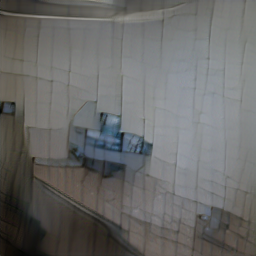
A rhomboid tile 4, 2019
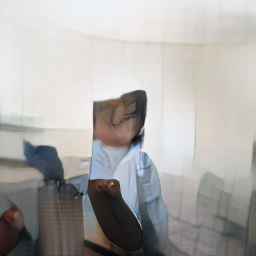
A bisexual person 45, 2019
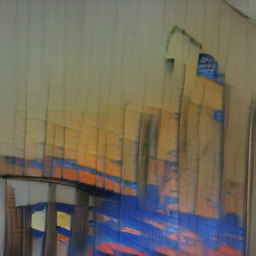
A kaleidoscope pattern 25, 2019
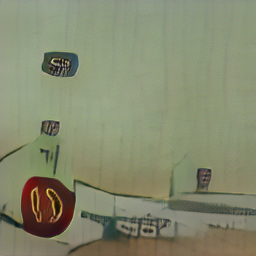
A hologram sticker 28, 2019
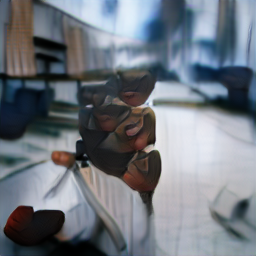
A clarinet player 10, 2019
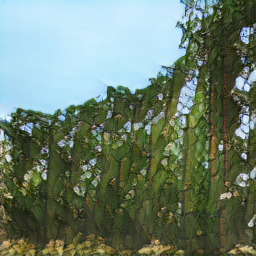
A magnolia tree 41, 2019
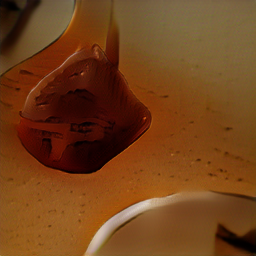
A matcha latte 26, 2019
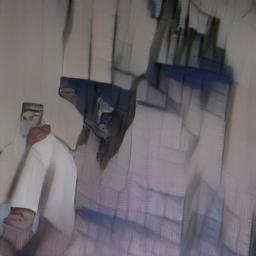
A sequin dress 37, 2019
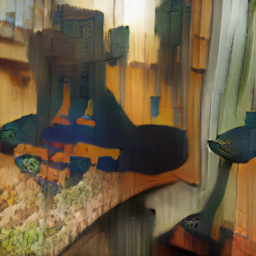
A nebula painting 35, 2019
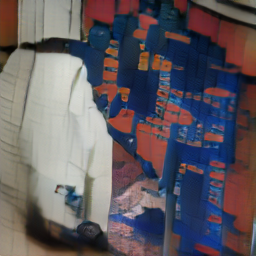
A platypus model 32, 2019
Each prompt was run 48 times, and each grid of 6 × 8 shows every result for one prompt. The arrangement changes from image to image, but the gap doesn’t. The missing word never shows up. What’s left is the system’s best guess at everything else.
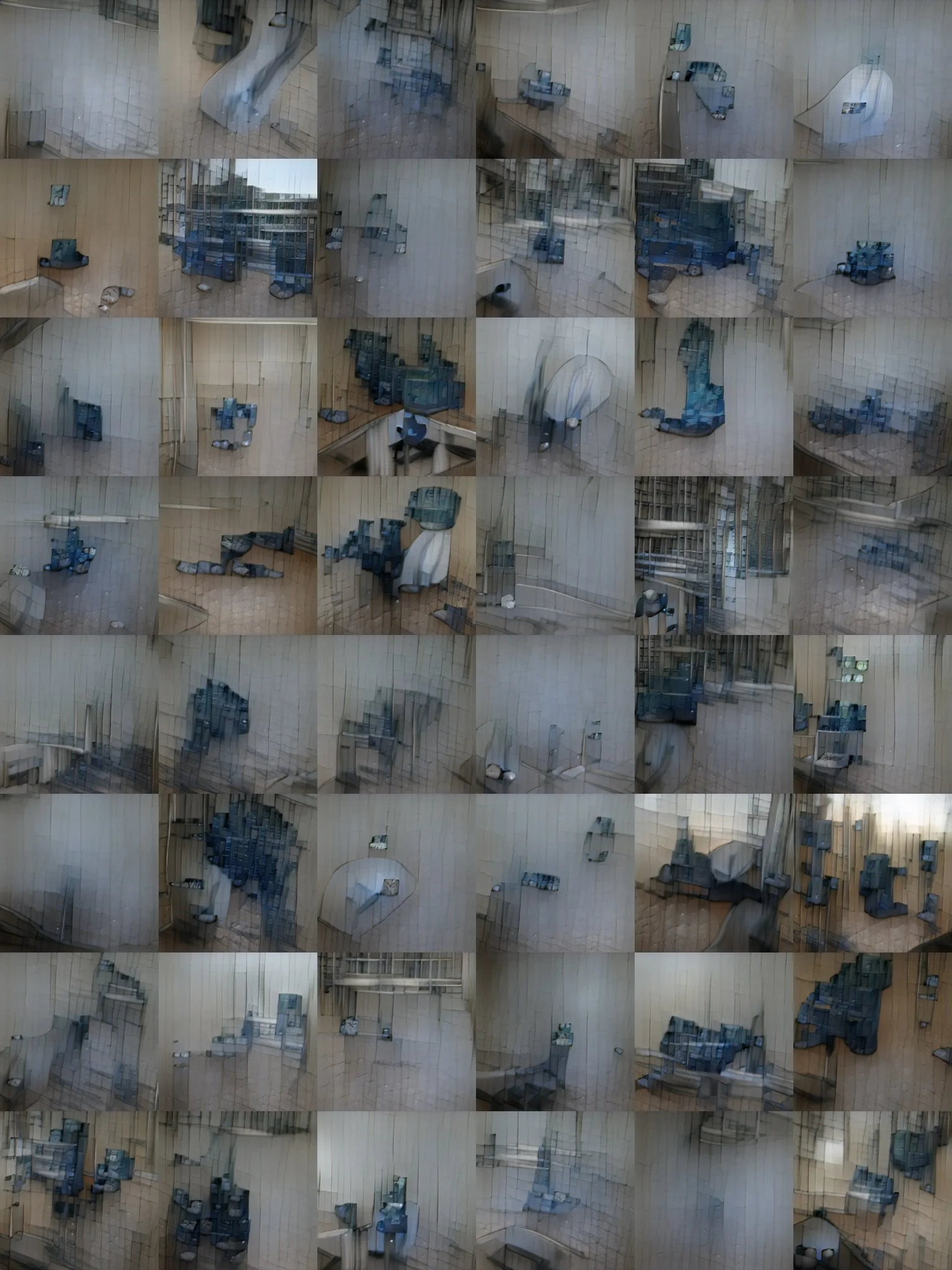
A rhomboid tile (grid), 2019
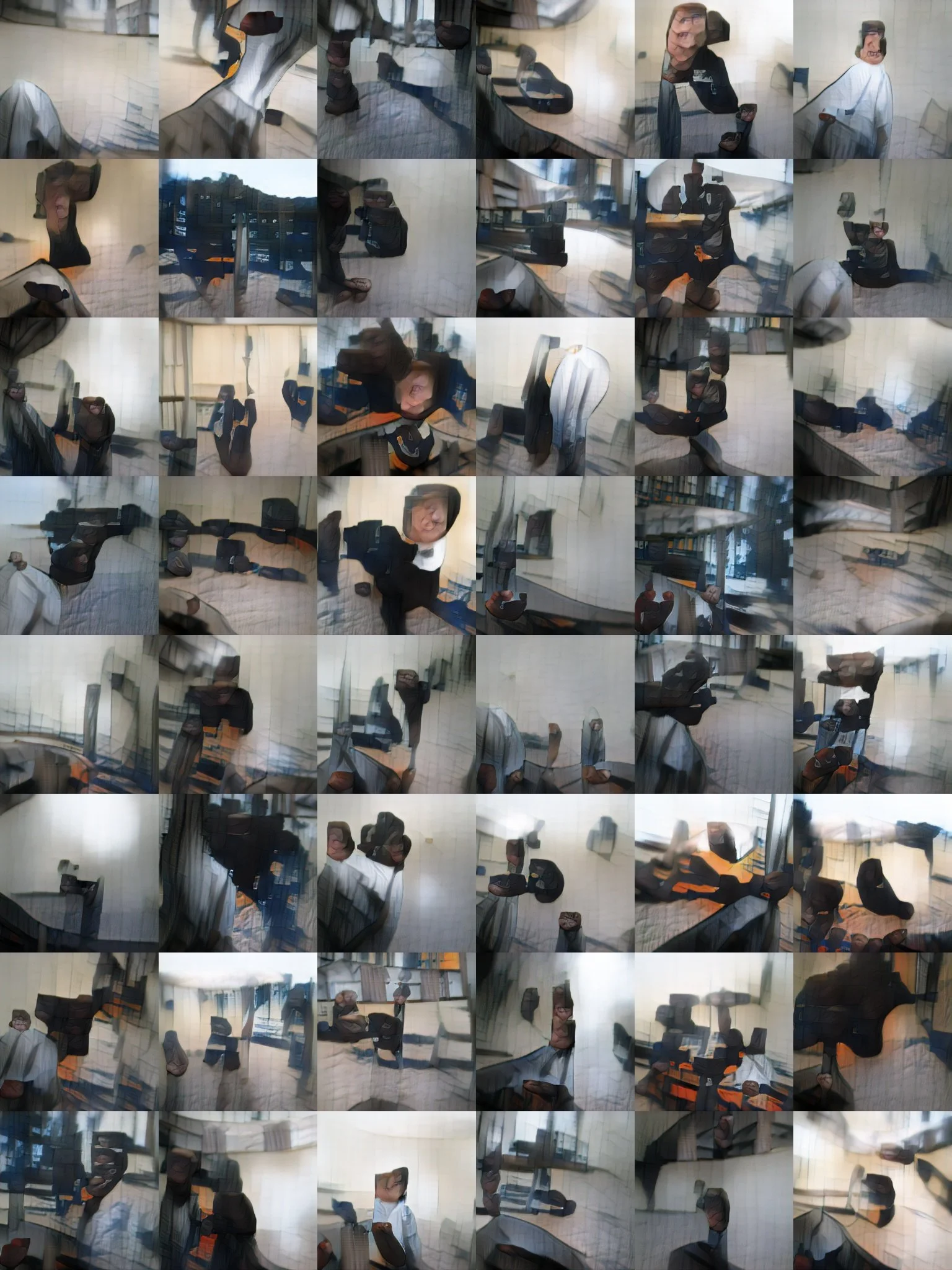
A bisexual person (grid), 2019
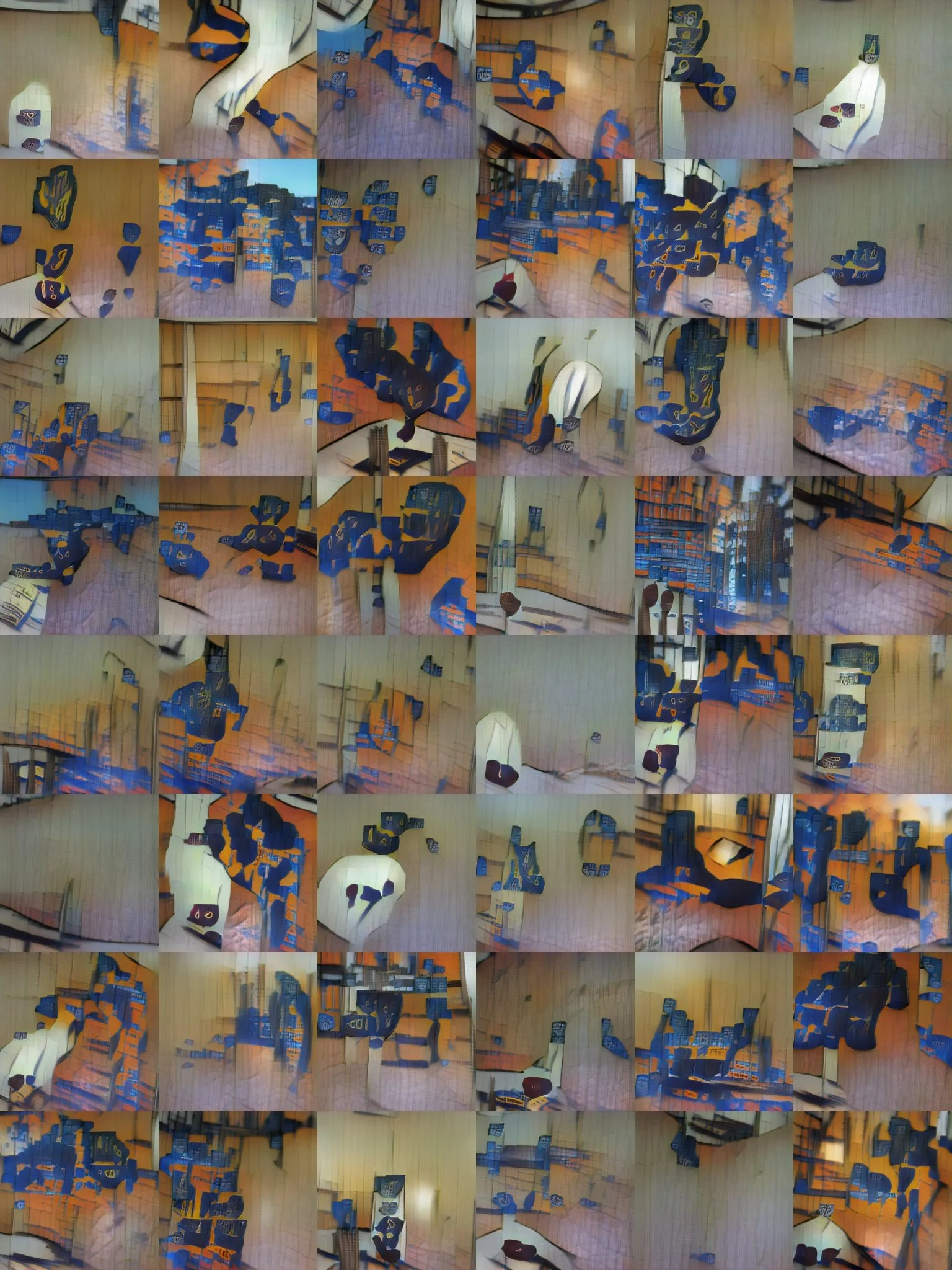
A kaleidoscope pattern, 2019
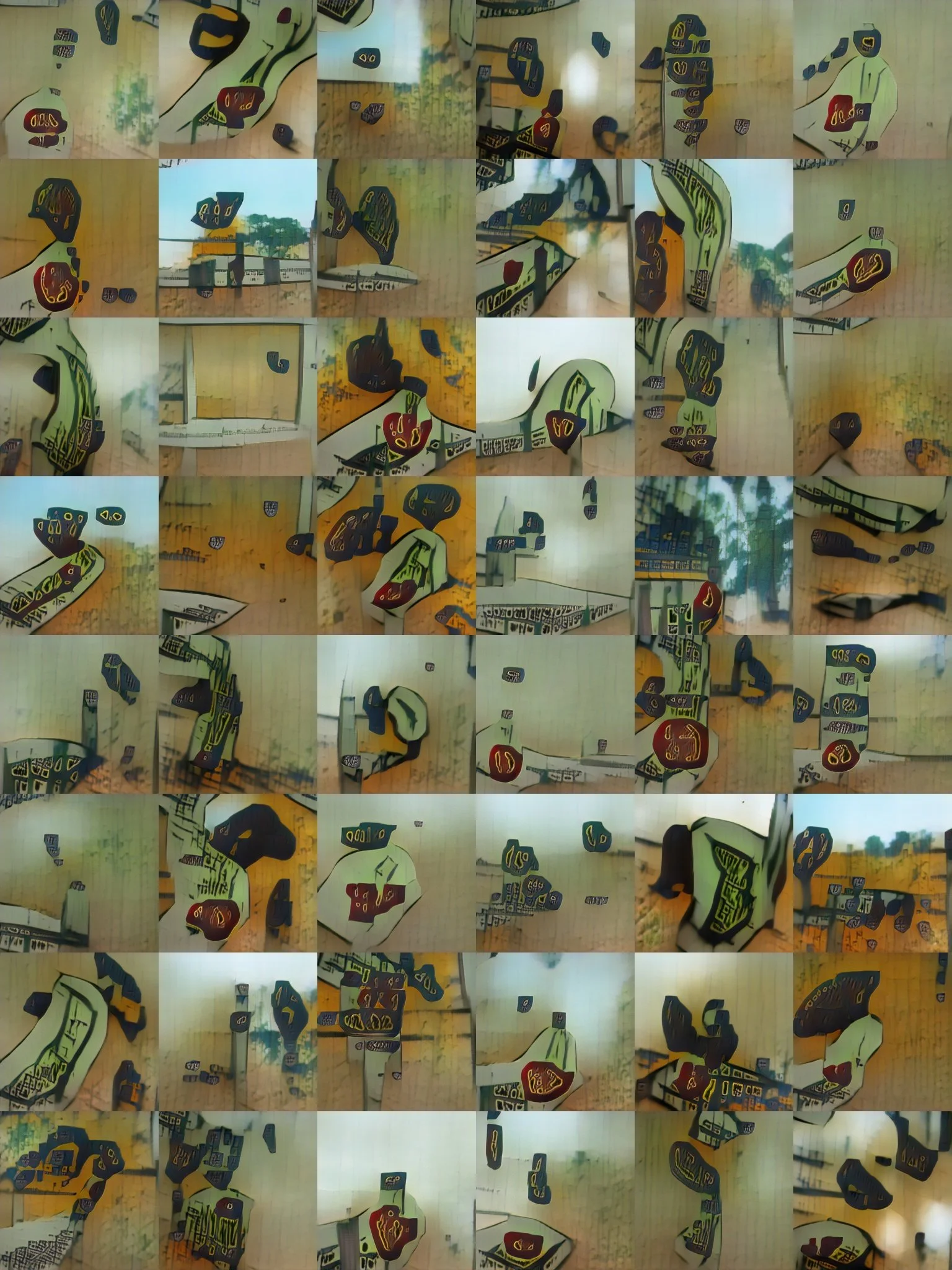
A hologram sticker (grid), 2019
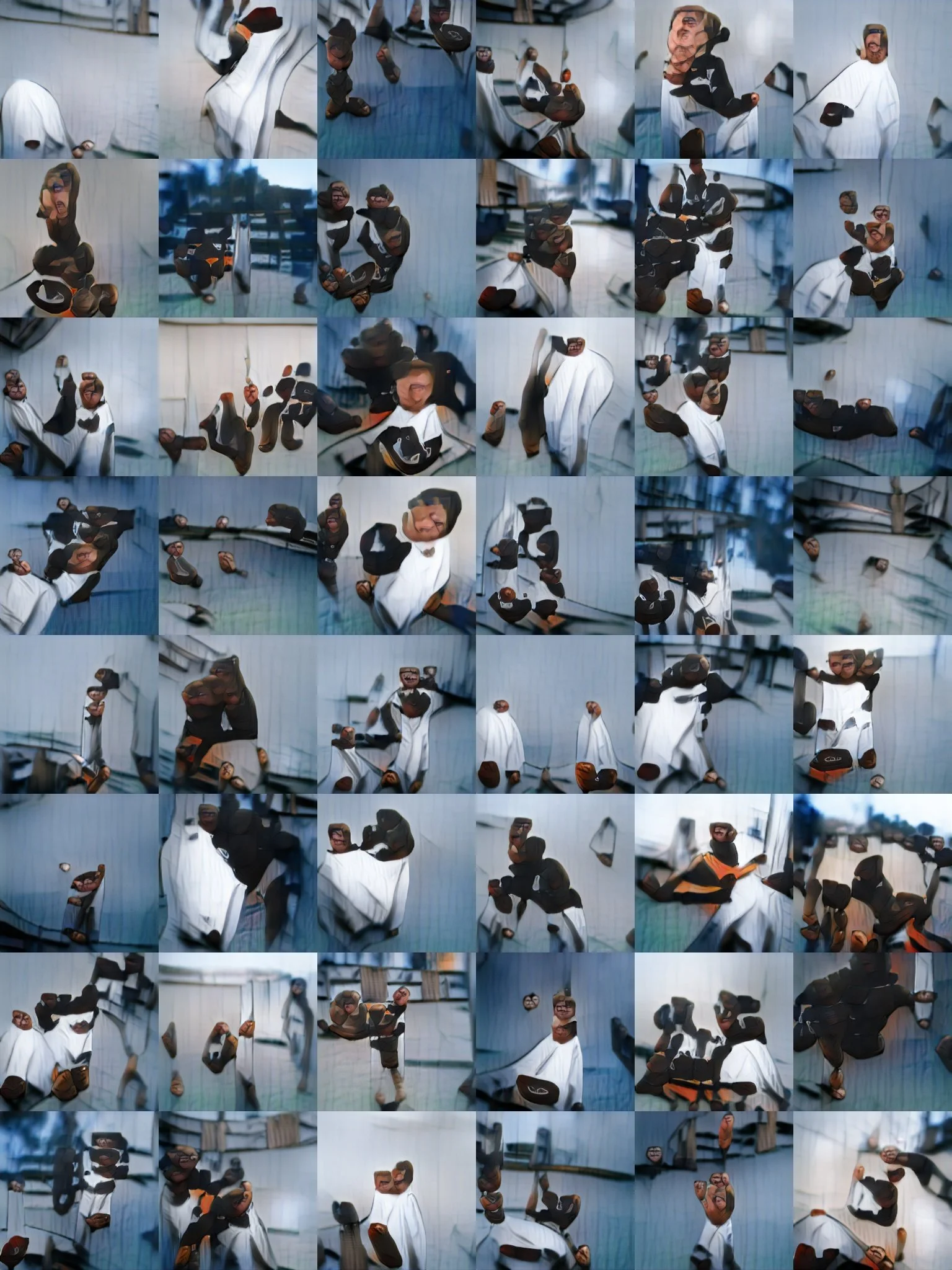
A clarinet player (grid), 2019
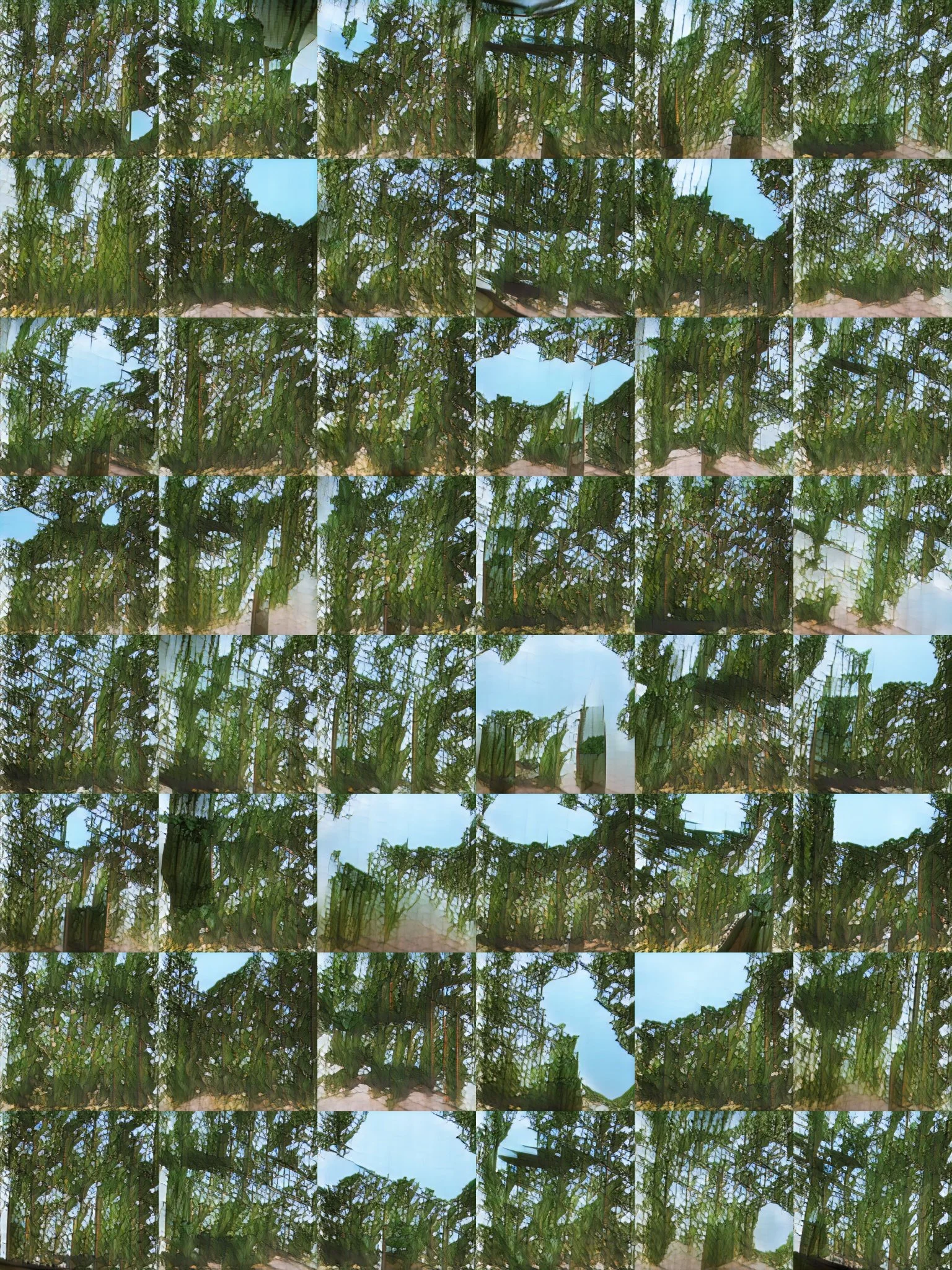
A magnolia tree (grid), 2019
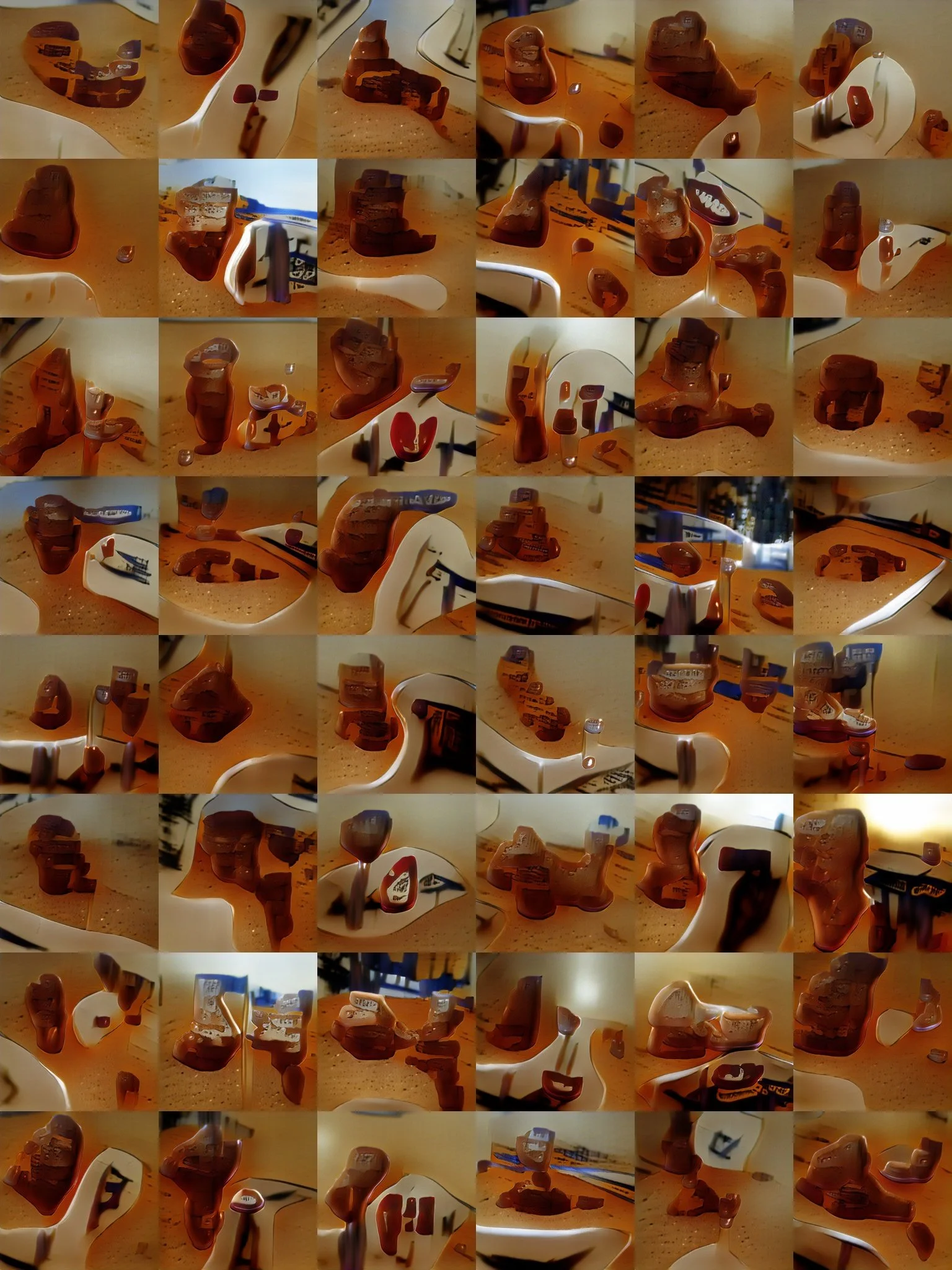
A matcha latte (grid), 2019
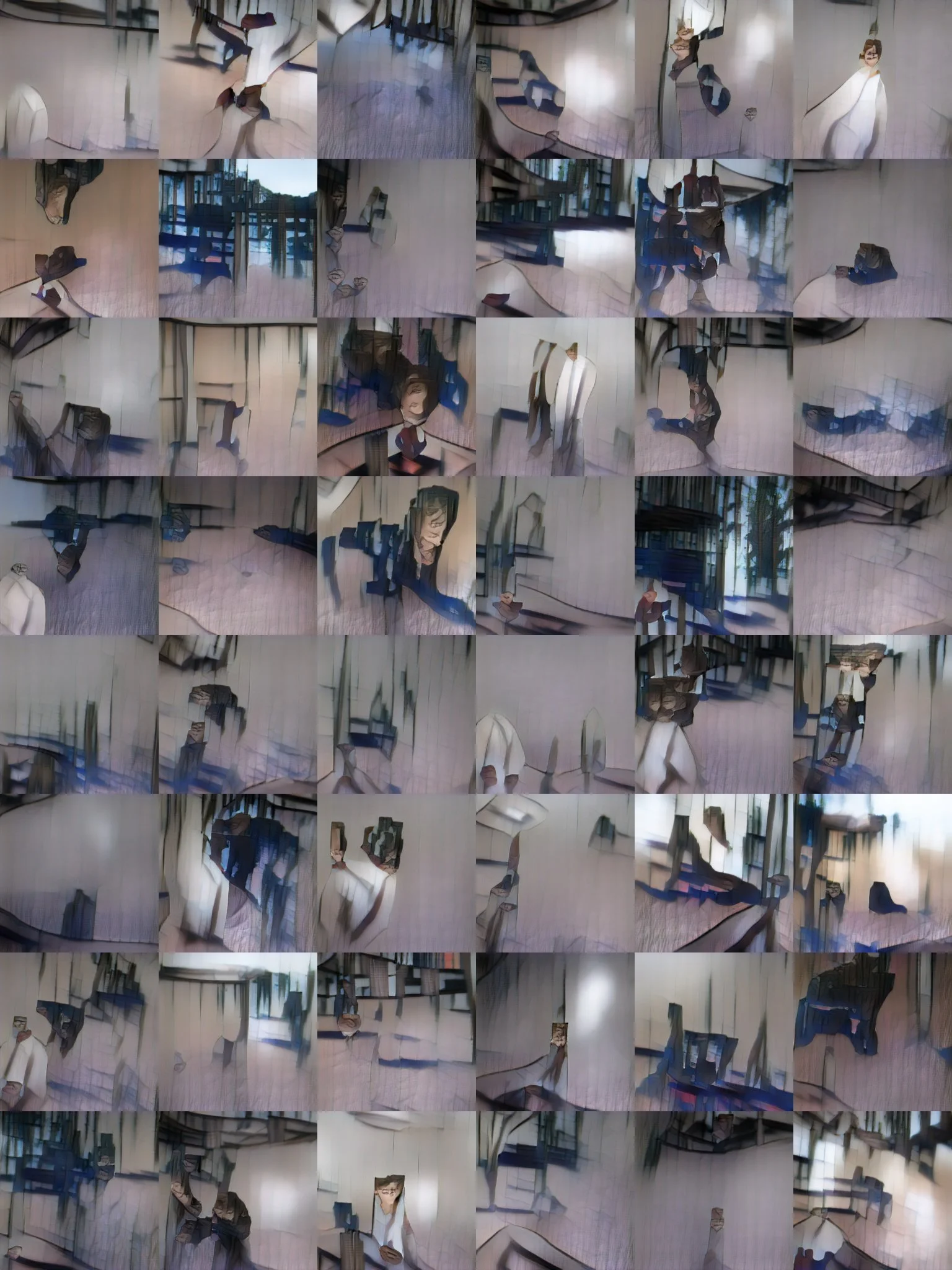
A sequin dress (grid), 2019
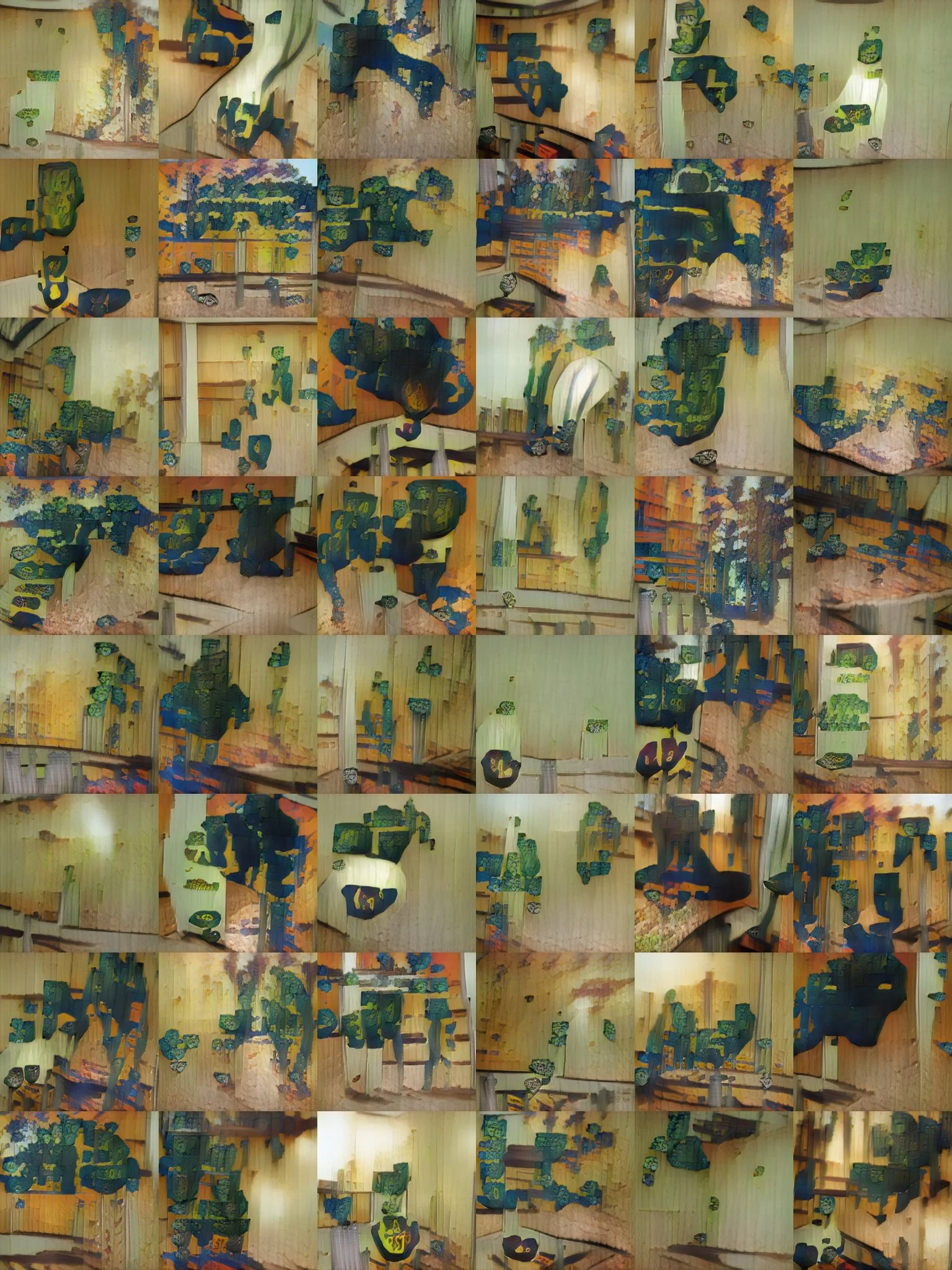
A nebula painting (grid), 2019
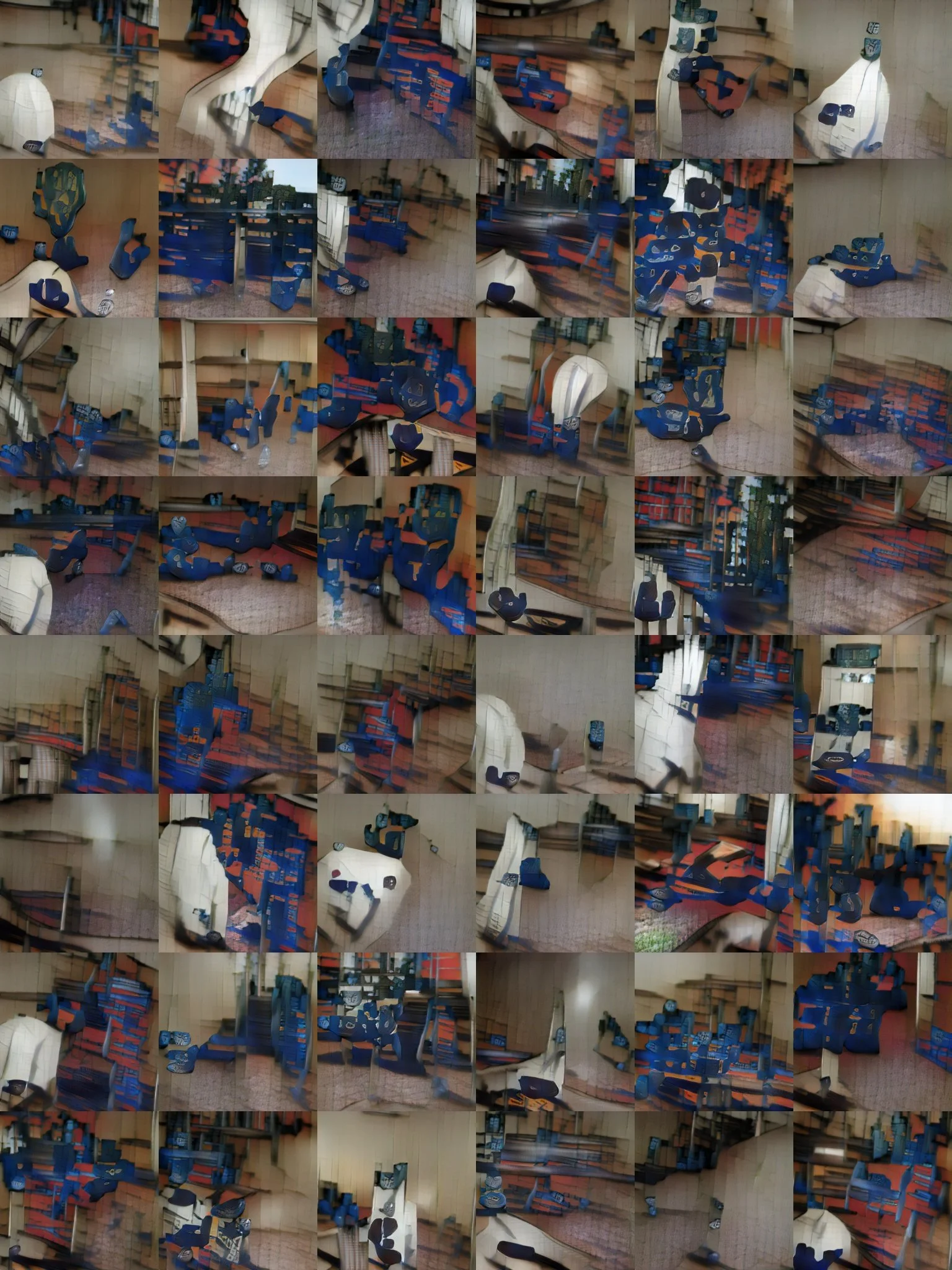
A platypus model (grid), 2019
The gaps don’t follow a neat pattern. “Ukulele” and “quinoa” are in the vocabulary, but “clarinet” and “matcha” aren’t. “Queer” turns up in just one of the 616,265 captions, printed on a frisbee. The vocabulary is a record of whatever people happened to type while describing photos, mistakes included. Close to one entry in seven is a misspelling. “Girrafe” and “d9ughnut” made it in. “Colour” didn’t.
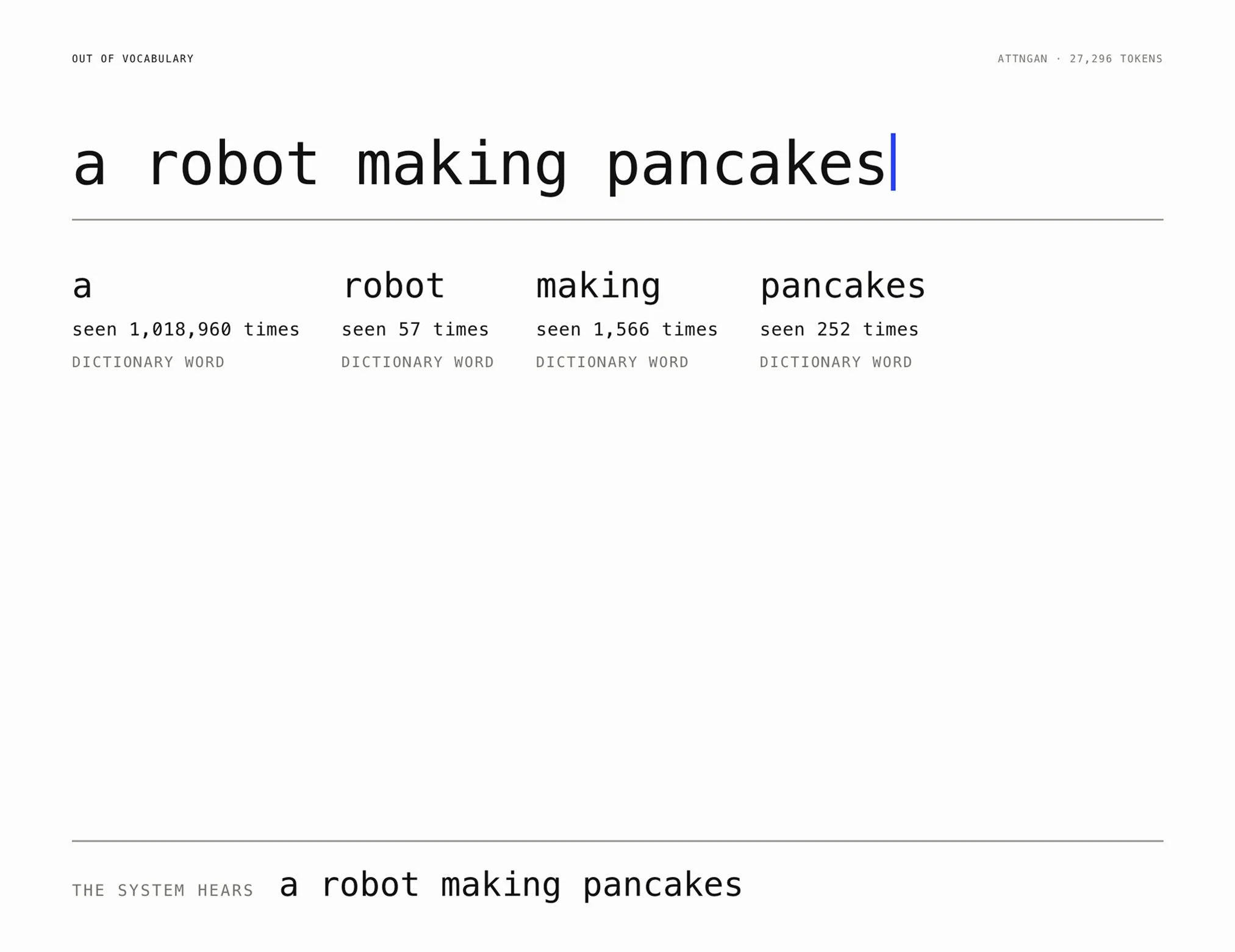
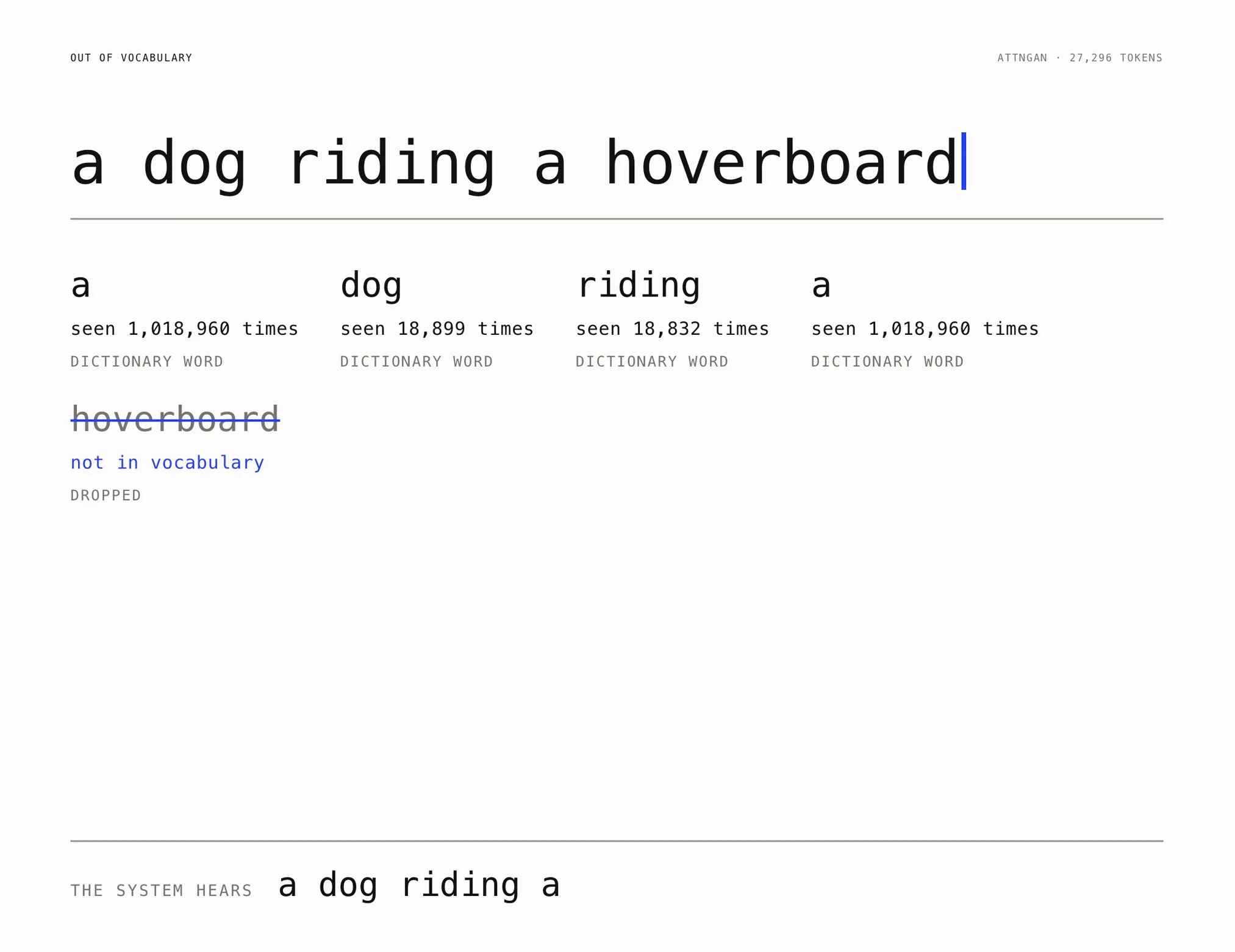
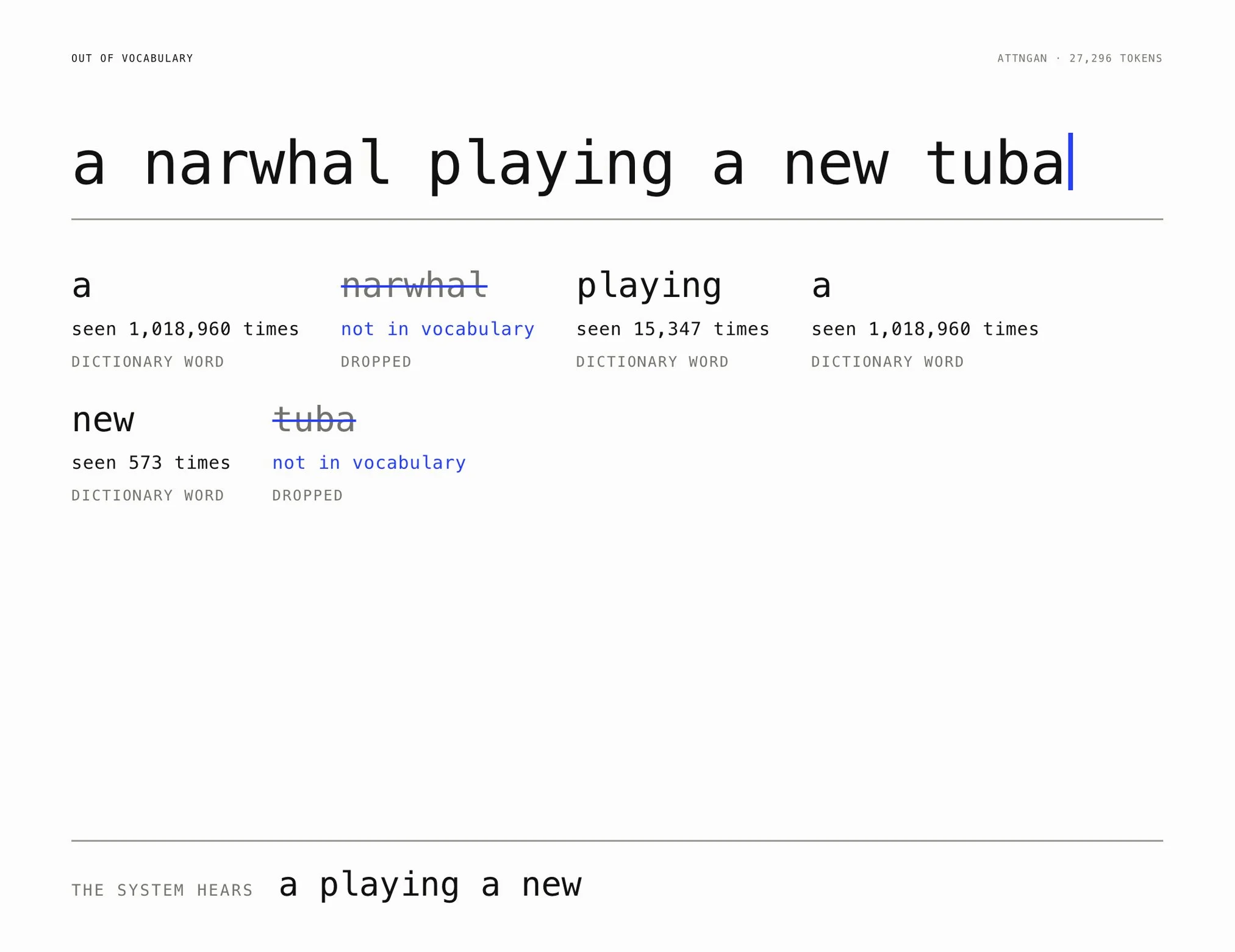
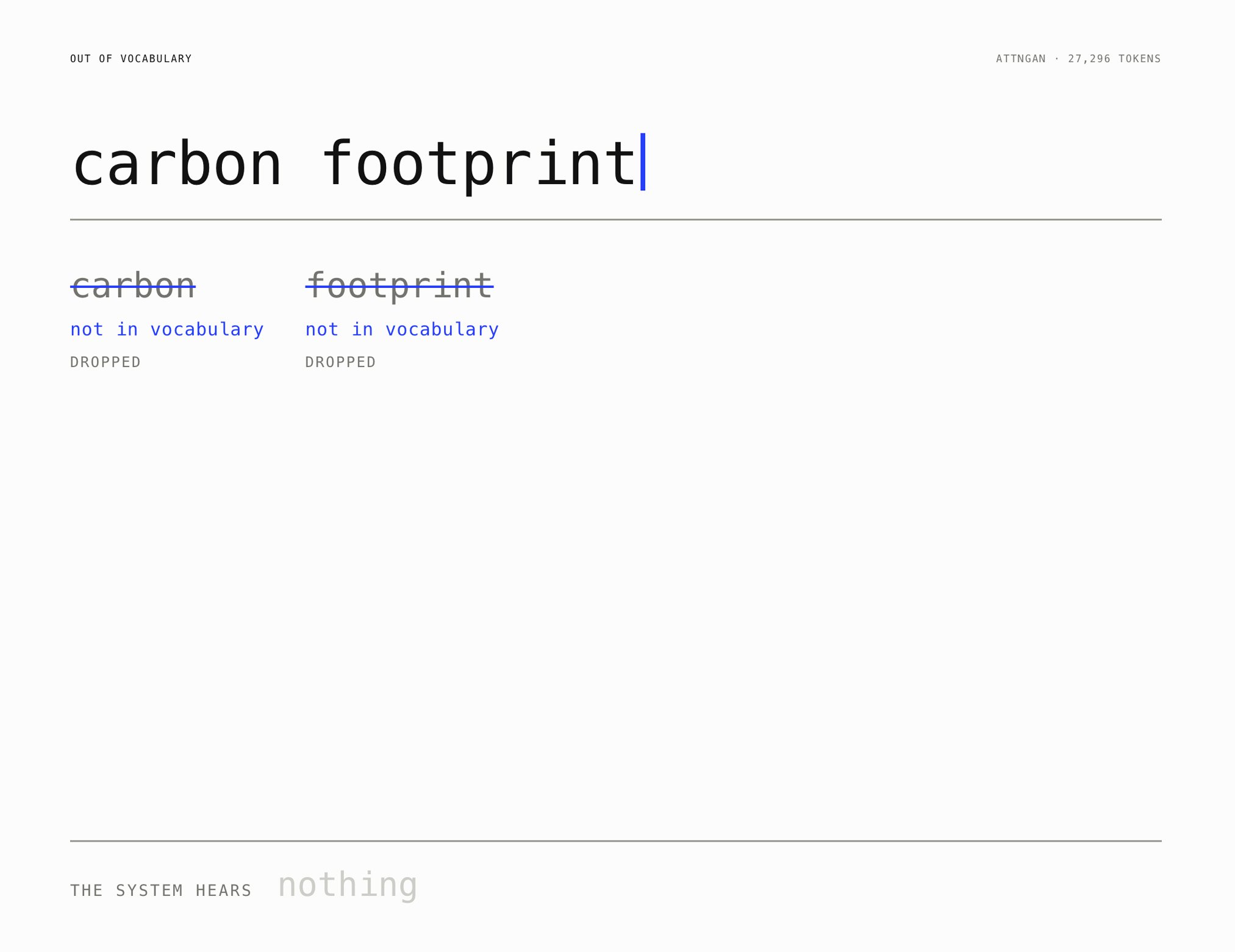
Alongside the images, there’s an interactive work that lets people test the vocabulary for themselves. Words are checked as they’re typed. Known words show how many times the system saw them in training. Missing words are struck through, and the line underneath shows what the system actually hears. Names, slang and spelling variations drop out quickly.